
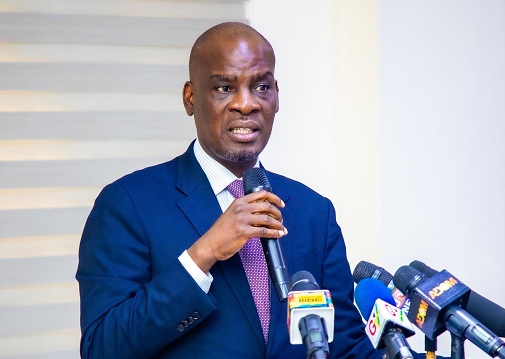


Government is considering a major policy shift to decentralise the recruitment, posting and sanctioning of teachers from the central government to the district assemblies, the Minister of Education, Haruna Iddrisu, has announced.
He said President John Dramani Mahama had directed a review of the current centralised teacher recruitment system to strengthen decentralisation and enhance efficiency in addressing local education needs.
Mr Iddrisu explained that the proposed policy change would make the recruitment of teachers a primary responsibility of the district assemblies, in line with the broader decentralisation framework currently under review.
He said the move was aimed at empowering local authorities to respond more swiftly to staffing needs in schools, particularly in underserved and hard‑to‑reach communities.
The Minister made this known when he addressed the 14th Congregation and 96th Anniversary of the St John Bosco’s College of Education in Navrongo.
Quoting the President, he said: “The President has asked how it is that a Municipal Assembly such as Kassena-Nankana cannot recruit and sanction a teacher but must wait for the Ghana Education Service. He wants a reversal of that policy.”
Mr Iddrisu added that discussions on the decentralisation of teacher recruitment were ongoing alongside proposals to adjust the District Assemblies Common Fund (DACF) to support the new responsibilities.
He said President Mahama was considering a gradual increase in the DACF from the current five per cent to 7.5 per cent, with the additional two per cent dedicated to decentralised education and health services.
“It is the thinking of President Mahama that the District Assemblies Common Fund, under Article 252 of the Constitution, be adjusted upwards from five per cent to 7.5 per cent, beginning with one per cent dedicated to decentralised education under the Ministry supervised by the Local Government, and another one per cent dedicated to health and decentralised health services,” he said.
He emphasised that any additional resources allocated to the sector would be tied to decentralised operations to ensure improved efficiency, transparency and accountability at the local level.
Mr Iddrisu noted that formal announcements on the proposed policy changes would be made after Cabinet and policy approvals, but assured that Government remained committed to reforming the education sector to improve service delivery.
He also disclosed that a review of the curriculum from kindergarten to the junior high school level was underway, with strong emphasis on digital literacy, digital education and the development of smart classrooms.
“It is our expectation that digital skills and digital education, and a move towards smart classrooms, should define the future of our investment in the education sector,” he added.
A total of 581 graduands from the 2023/2024 academic year were awarded various degrees, including Bachelor of Education in Science, Agriculture, Mathematics, ICT, Visual Art, Construction Technology, Metal and Automotive Technology, Electronic Technology, Wood Technology and Home Economics for Junior High School specialisation, as well as Bachelor of Education for Upper Primary.
GNA