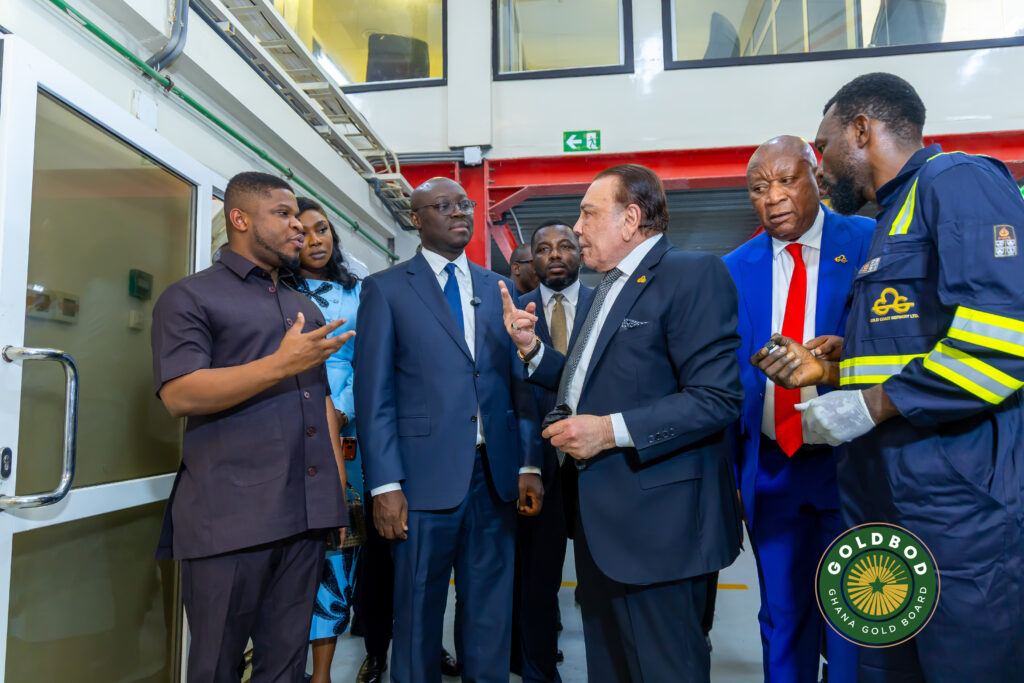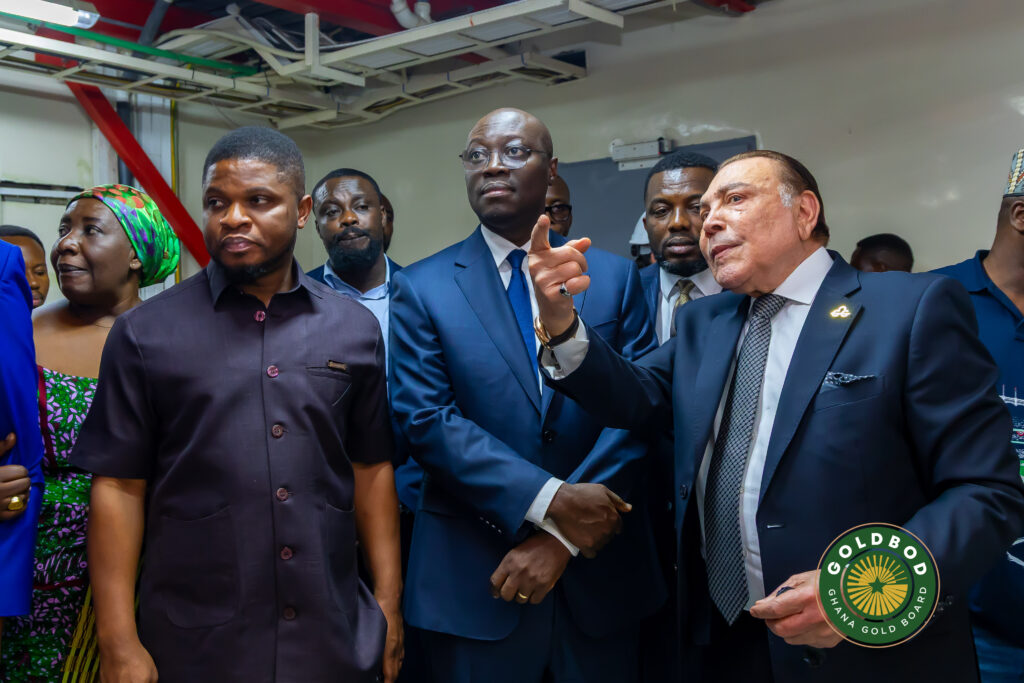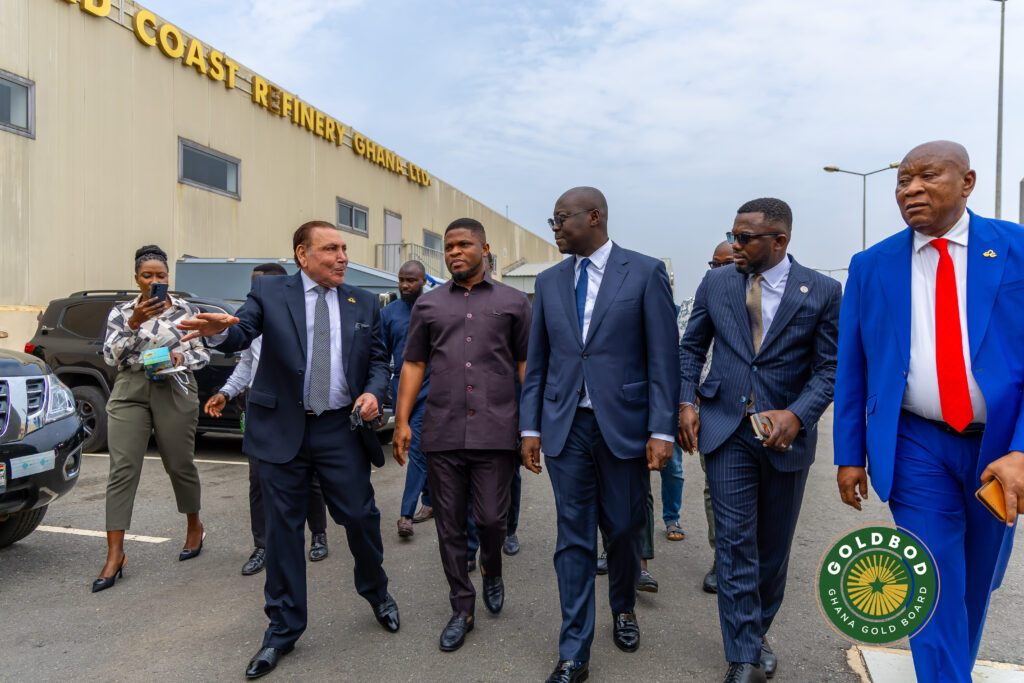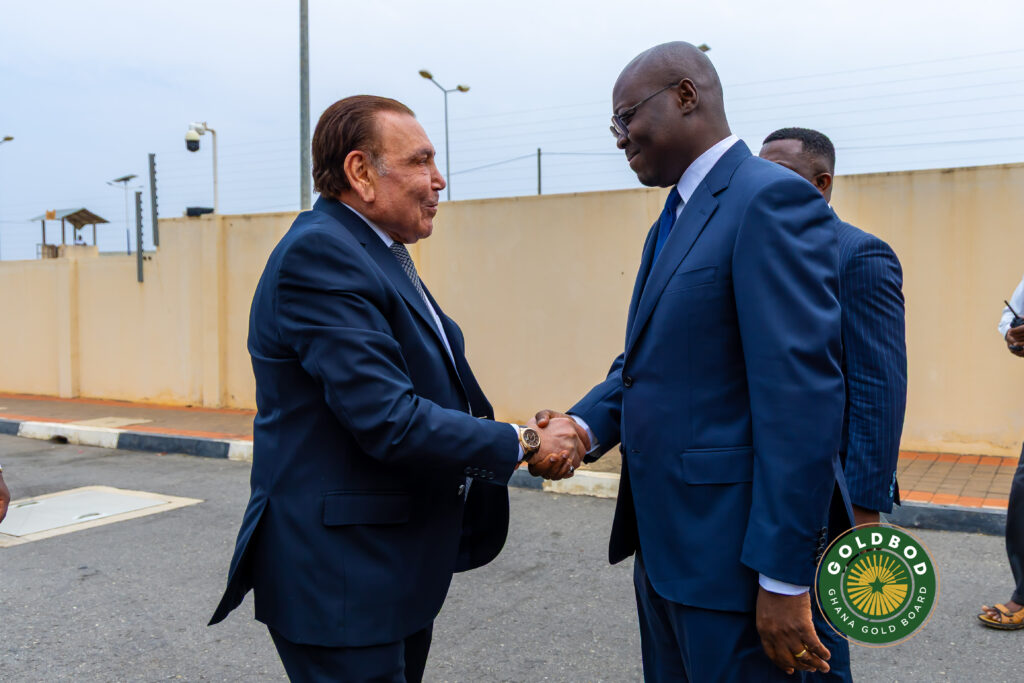
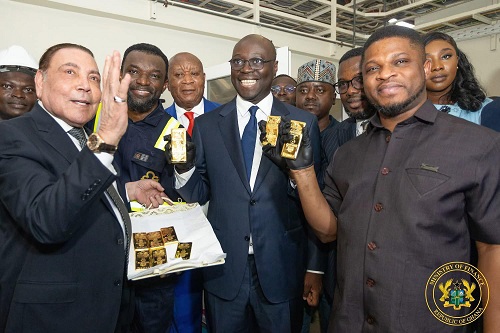


The Minister for Finance and Economic Planning, Dr. Cassiel Ato Forson, and the Chief Executive Officer of the Ghana Gold Board (GoldBod), Sammy Gyamfi, Esq., have toured the Gold Coast Refinery to inspect the first batch of gold refined locally under Ghana’s new domestic gold refining regime.
The inspection follows the commencement of refining operations under a landmark agreement signed last month between GoldBod and Gold Coast Refinery, which mandates the refinery to process all gold purchased by GoldBod from the Artisanal and Small-Scale Mining (ASM) sector.
The agreement provides for the supply of one tonne of gold weekly for refining, with operations officially beginning this February.
During the tour, the Executive Chairman of Gold Coast Refinery, Dr. Said Deraz, led the Minister and the GoldBod CEO through the entire refining process, explaining how raw ASM gold supplied by GoldBod is transformed into internationally compliant bullion bars.
He disclosed that Gold Coast Refinery is working in technical partnership with Rand Refinery, the only LBMA-accredited refinery in Africa to ensure that Ghana’s gold is refined locally to global standards.
Dr. Deraz demonstrated the various stages of production, including the crushing of raw gold into a mud-like state, heating and purification processes that produce granular gold, and the final refining stage using a flameless tunnel furnace and other specialized systems to mould the material into gold bars.
The delegation which included the Deputy CEO of the Ghana Gold Board, Richard Nunekpeku, Esq. as well as some Board members of the Ghana Gold Board also inspected the assay laboratory, XRF and ICP-OES laboratories, melting room, gold dryer, incinerator, bar section and the refinery’s vaults.
At the bar production section, Dr. Forson personally examined finished gold bars stamped with the insignia of the Ghana Gold Board, the Bank of Ghana, Gold Coast Refinery and the Ghana Standards Authority.
He was also taken to the vaults, where he was shown the quantity of gold refined so far.
According to Dr. Deraz, Gold Coast Refinery has the capacity to refine up to two tonnes of gold per week, although the current agreement with GoldBod provides for the processing of one tonne weekly.
“These gold bars you see here belong to the Ghana Gold Board. We are only service providers,” he stated.
Speaking to the media after the inspection, Dr. Forson described the commencement of local refining as a major milestone in Ghana’s economic transformation agenda and a fulfilment of President John Dramani Mahama’s long-standing vision for the country to refine its own gold.
He recalled that the Gold Coast Refinery was commissioned in 2016 by President Mahama but remained underutilised in subsequent years.
He explained that government support for GoldBod’s partnership with Gold Coast Refinery is intended to ensure that Ghana derives maximum value from its gold resources, particularly from the ASM sector.
The Finance Minister commended GoldBod’s performance since it began full operations in May 2025, noting the positive impact of its activities on the sector.
Dr. Forson announced that the refining operations have already resulted in the employment of about 162 additional Ghanaians and enabled the refinery to operate on a 24-hour basis in line with government 24-hour economy policy.
He expressed satisfaction that, for the first time in Ghana’s history, gold bars refined locally now bear the emblem of Ghanaian state institutions.
He further tasked Gold Coast Refinery to work towards attaining LBMA certification in the near future and encouraged GoldBod to take steps to establish a national assay laboratory by the end of the year, assuring them of his support.
The Finance Minister disclosed that 300 kilograms of gold were supplied to the refinery a day earlier and immediately fed into the refining process, with the remaining to be supplied in subsequent days by the Ghana Gold Board, describing the inspection as confirmation that Ghana has entered a new era of local gold refining.
He also inspected bullion vans belonging to Gold Coast Refinery, commending the company for investing in the infrastructure required to position Ghana as a leading gold refining hub in Africa.
He also inspected bullion vans belonging to Gold Coast Refinery, commending the company for investing in the infrastructure required to position Ghana as a leading gold refining hub in Africa.