


Ghana will start refining one metric tonne of its gold locally every week from February 1, 2026, marking a decisive shift from raw mineral exports to value-added gold exports.
This followed an agreement the Ghana Gold Board (GoldBod) signed with Gold Coast Refinery Limited on Tuesday, January 20, 2026, for the landmark initiative.
The move is aimed at boosting export value and retaining refining fees within the local economy.
Speaking at the signing ceremony in Accra, Chief Executive Officer of the Ghana Gold Board (GoldBod) Mr. Sammy Gyamfi, said the agreement between the Gold Coast Refinery and its partners, Rand Refinery, forms part of the government’s plan to ensure gold exported from the country has full value addition.
He said Rand Refinery of South Africa, which is the only London Bullion Market Association (LBMA) accredited refinery in Africa, is expected to strengthen technical and managerial capacity and support the country to establish an LBMA-accredited refinery.
According to the CEO, a visit by GoldBod officials to Gold Coast Refinery last year revealed that the facility, described as the largest gold refinery in the sub-region, was operating far below its installed capacity, given that over 99 per cent of Ghana’s gold exports, from both small-scale and large-scale mining, are exported abroad in raw form.
“As a government, it did not make sense that we would have such a critical national asset and yet continue exporting almost all our gold without refining it locally. This prompted discussions with the refinery to revive its operations and integrate it into Ghana’s gold value chain.
“This partnership signals that we are not only interested in refining gold locally but also doing so sustainably, with full traceability and in line with LBMA guidelines. It will result in a significant presence of Rand Refinery in Ghana and will greatly accelerate our journey toward establishing the first LBMA-accredited refinery in Ghana. Together with the Ministry of Finance and the Ghana Gold Board, we believe that Ghana will win,” Mr Sammy Gyamfi stated.
He explained that the agreement, which has undergone rigorous scrutiny by the GoldBod governing board and the sector minister, will be implemented through a phased approach, with the ultimate goal of achieving total local refining of all gold exported from Ghana.
The CEO further indicated that under the agreement, gold refined locally will achieve a minimum purity of 99.5 per cent, with the refinery capable of producing even higher grades with a 15 per cent free carried interest in Gold Coast Refinery, which is held in trust by the Ghana Gold Board on behalf of the state.
The CEO further indicated that under the agreement, gold refined locally will achieve a minimum purity of 99.5 per cent, with the refinery capable of producing even higher grades with a 15 per cent free carried interest in Gold Coast Refinery, which is held in trust by the Ghana Gold Board on behalf of the state.
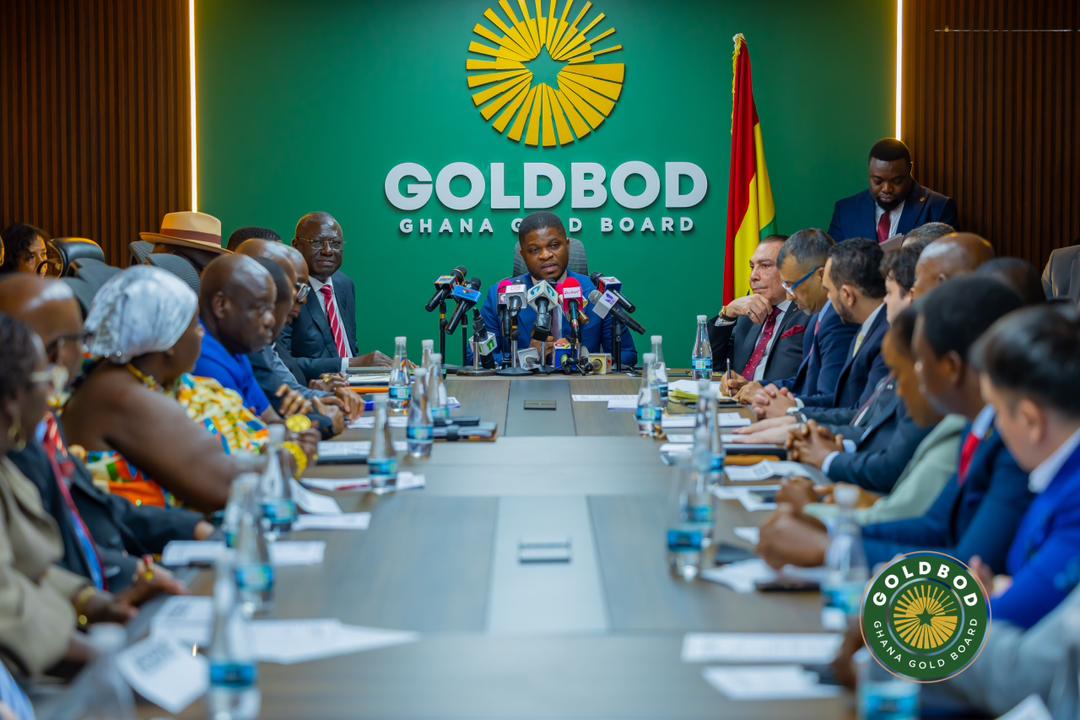
Highlighting the benefits of the agreement, Mr. Gyamfi said refining gold locally would retain millions of dollars currently paid to foreign refineries, create direct and indirect jobs in line with the government’s 24-hour economy policy, increase tax revenues, and generate earnings for the country.
He also said the agreement would address long-standing issues of purity losses and undervaluation of gold exports by enabling fire assay, the global gold standard, to be conducted locally before and after refining.
This, he noted, would allow Ghana to accurately determine the true value of its gold without relying on foreign refineries, adding that jewellers involved in the fabrication industry will have access to adequate silver and refined gold with quality jewellery and other forms of gold and silver ornaments.
For his part, Chief Executive Officer of Gold Coast Refinery, Dr. Said Deraz, said the facility, commissioned in November 2016, had faced operational challenges in the past, but the agreement marked a turning point for full-scale operations.
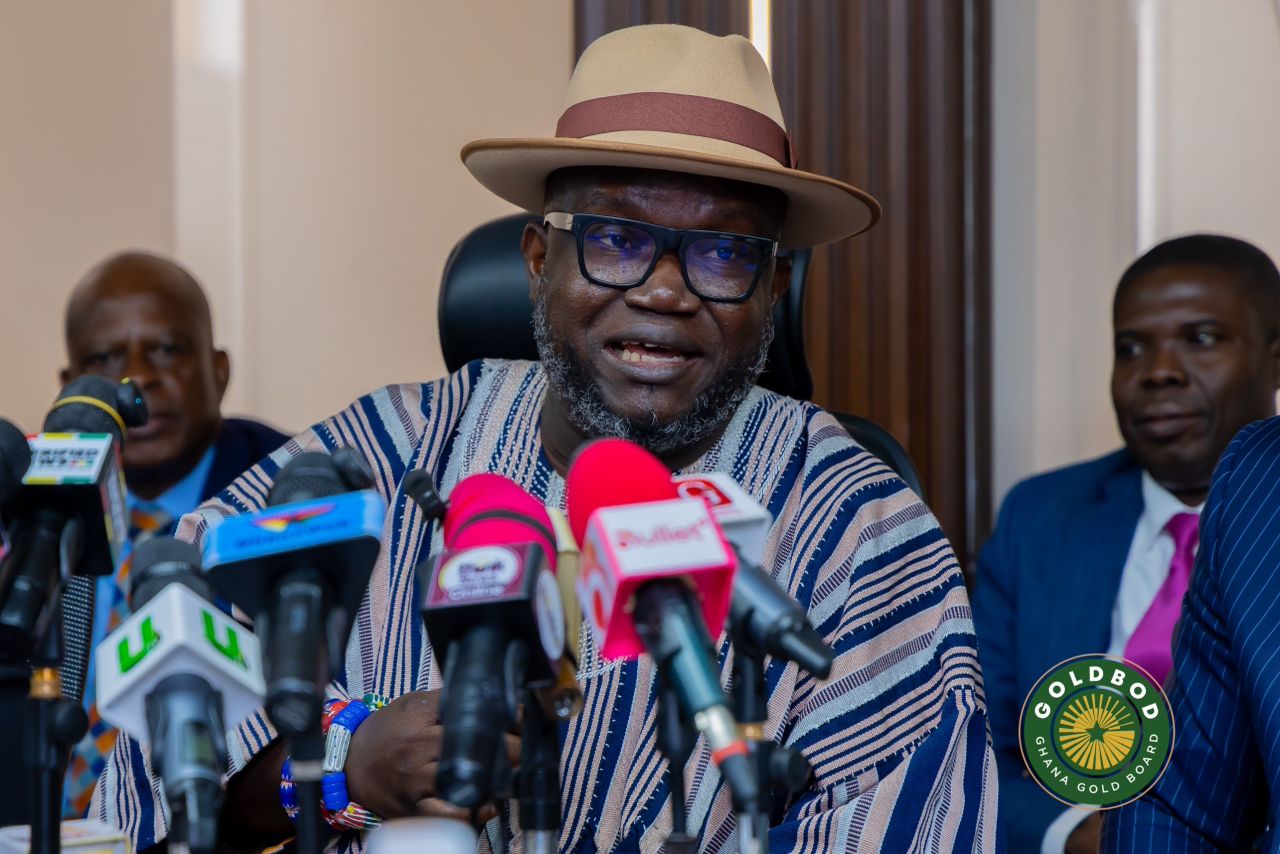
He said Gold Coast Refinery is a modern, fully equipped facility with the capacity to process up to 180 metric tonnes of gold annually and holds all required licences to refine gold from ethical and responsible sources.
Dr. Deraz confirmed that Gold Coast Refinery has concluded a technical, operational and commercial partnership with Rand Refinery, which will significantly accelerate Ghana’s journey toward establishing its first London Bullion Market Association LBMA-accredited gold refinery.
“With this agreement, Gold Coast Refinery will receive gold ore from the Ghana Gold Board and refine it before export. This value addition will increase export earnings, create jobs and support Ghana’s industrialisation agenda,” he said.
He also expressed gratitude to President John Mahama, Minister of Finance, Lands and Natural Resources, and the Ghana Gold Board for their support, adding that the partnership could serve as a model for the sub-region and beyond.
Present at the signing ceremony were the Chief Executive of the Ghana Chamber of Mines, Ken Ashigbey, Deputy Minister of Lands and Natural Resources, Alhaji Yusif Sulemana, CEO of Rand Refinery Board Chairman of GoldBod, Mr. Kojo Fynn, among several other stakeholders in the gold value chain.