
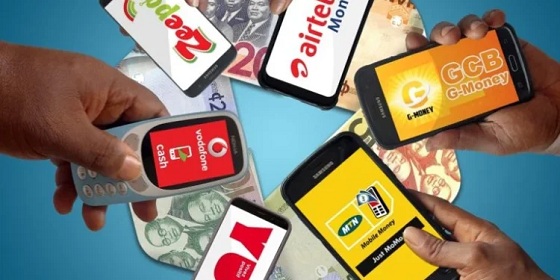


Ghana’s mobile money sector reached a historic high in December 2025, recording a transaction value of GH¢518 billion, a clear signal of the country’s accelerating shift toward digital payments and a cash-lite economy.
The milestone reflects the growing dependence on mobile money for everyday financial activities, including transfers, bill payments, merchant services, savings, and government-related transactions. What started as a basic person-to-person transfer tool has evolved into a core pillar of Ghana’s financial system.
According to the Bank of Ghana’s Summary of Economic and Financial Data, December posted the highest monthly mobile money transaction value on record, cementing digital wallets as the backbone of the retail payments ecosystem.
The surge was partly driven by heightened consumer activity during the Christmas and New Year festivities. Transaction volumes climbed to 982 million in December, up from 892 million in November, as households and businesses increasingly relied on mobile money for seasonal spending.
Beyond seasonal factors, the data points to deeper structural growth. Active mobile money accounts increased to 26.7 million, from 25.5 million in November, while total registered accounts exceeded 80.5 million.
Mobile wallet balances also rose to a 2025 peak of GH¢39.6 billion, indicating rising confidence in mobile money as both a payment and value-storage platform.
Mobile money continues to dwarf traditional payment channels. While mobile transactions surpassed GH¢518 billion, cheque transactions amounted to just GH¢37.3 billion, with even faster electronic alternatives such as GhIPSS Instant Pay, at GH¢73.3 billion, trailing far behind.
Analysts attribute the sustained expansion to increased smartphone penetration, a nationwide network of about 491,000 active agents, and enhanced interoperability across mobile networks.
Interoperable transactions alone rose to GH¢5.8 billion in December, highlighting growing cross-network usage.
As Ghana advances toward a digital economy, mobile money has become deeply embedded in everyday commerce—facilitating transactions ranging from informal micro-payments to large-scale business settlements.