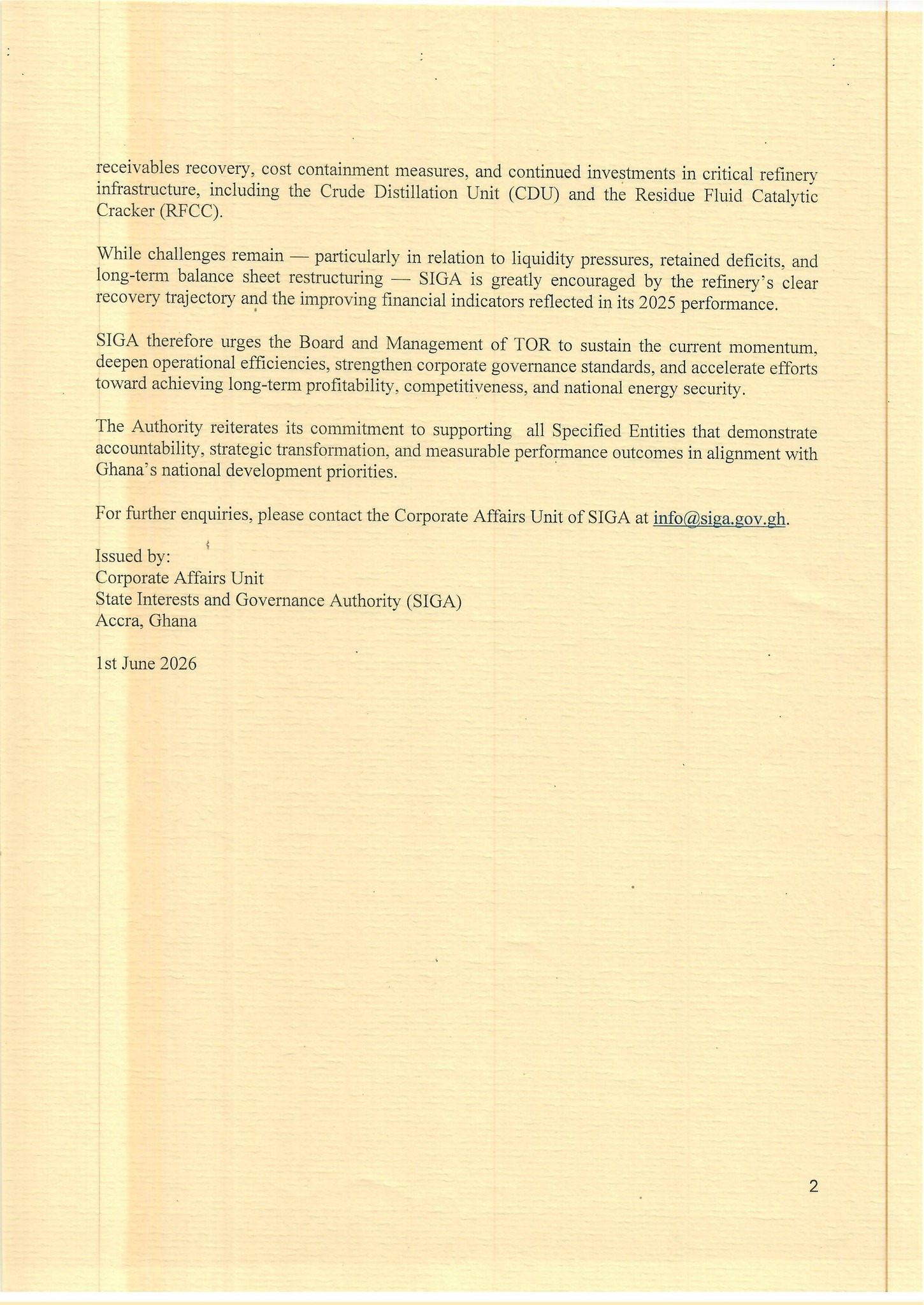


The State Interests and Governance Authority (SIGA) has commended the Tema Oil Refinery (TOR) for recording a profit before tax of GHC 1.24 billion in 2025 and submitting six years of outstanding audited financial statements.
In a statement issued on Monday, 1 June 2026, SIGA described the development as a major milestone in the refinery’s governance, compliance, and accountability efforts, noting that TOR had not produced audited accounts for the period between 2019 and 2024.
According to SIGA, the refinery’s audited accounts for 2025 show a profit before tax of GHC 1.24 billion, representing TOR’s first profit in a decade.
The authority said the performance reflects significant progress in the refinery’s financial and operational recovery.
“According to the audited accounts presented to SIGA, TOR recorded a historic profit before tax of GHC 1.24 billion in 2025—the refinery’s first profit in ten years and a significant indicator of renewed institutional recovery,” the statement said.
SIGA highlighted several achievements recorded by the refinery in 2025, including strong revenue growth, which it described as TOR’s best financial performance since 2019.
The Authority also cited a foreign exchange gain of GHC 1.3 billion resulting from prudent financial and forex management strategies, as well as an increase in the share of associate profit to GHC 155 million.
The refinery also improved its debt and receivables management. Trade and other payables reduced from GHC 7.1 billion in 2024 to GHC 5 billion in 2025, while receivable days declined from 1,099 days to 652 days.
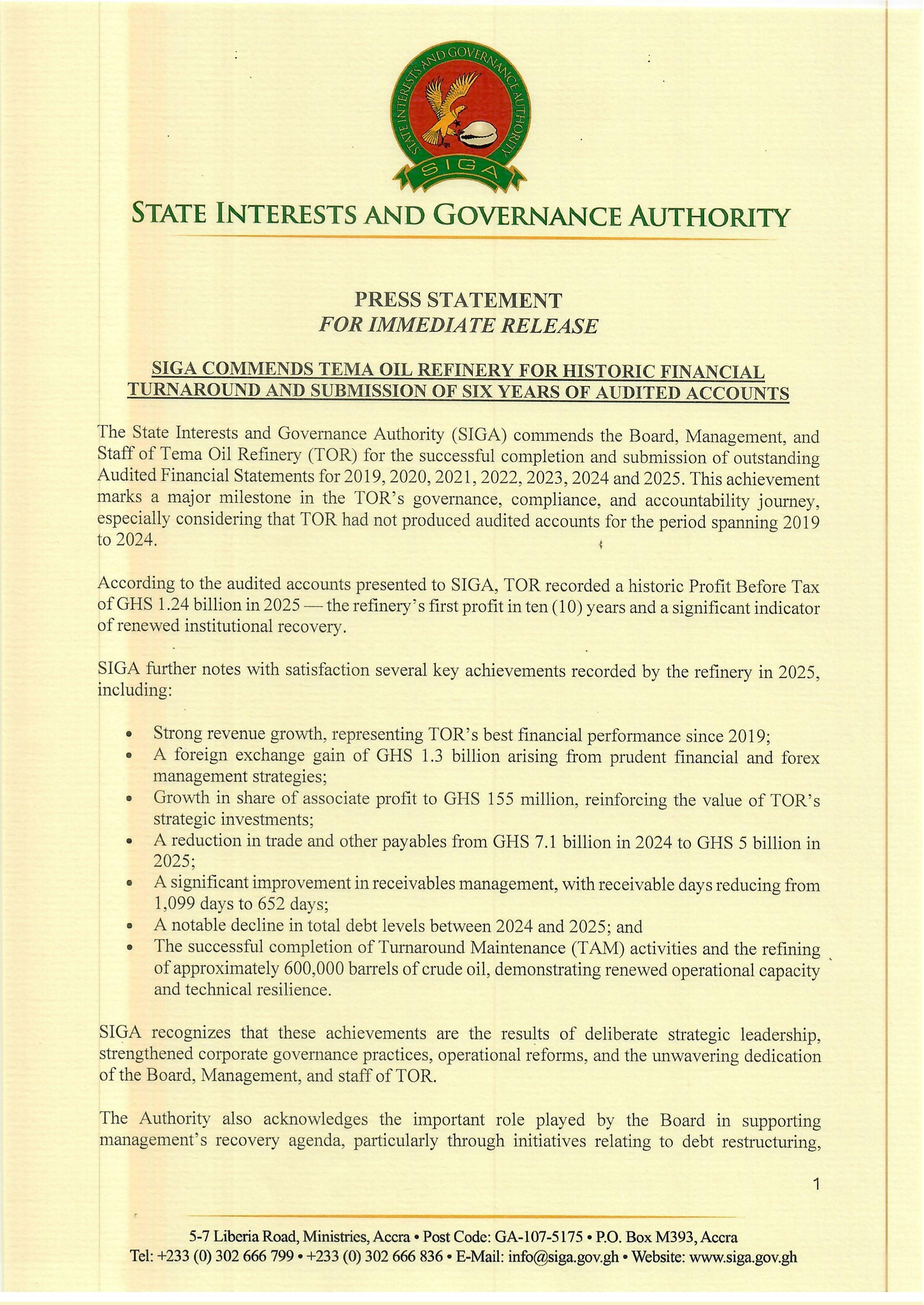
SIGA further noted a reduction in total debt levels between 2024 and 2025.
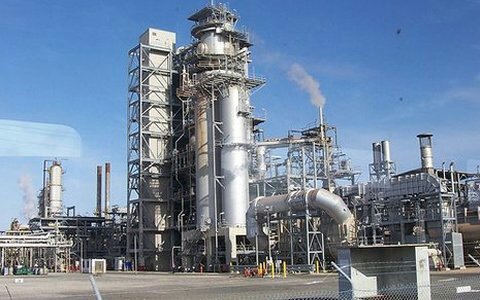
Operationally, TOR successfully completed its Turnaround Maintenance (TAM) programme and refined approximately 600,000 barrels of crude oil, a development the authority said demonstrates renewed operational capacity and technical resilience.
SIGA attributed the achievements to strategic leadership, strengthened corporate governance practices, operational reforms, and the commitment of the refinery’s board, management, and staff.
The authority also acknowledged the role played by the board in supporting management’s recovery agenda through debt restructuring, receivables recovery, cost containment measures, and investments in critical refinery infrastructure, including the Crude Distillation Unit (CDU) and the Residue Fluid Catalytic Cracker (RFCC).
While acknowledging ongoing challenges relating to liquidity pressures, retained deficits, and long-term balance sheet restructuring, SIGA said it was encouraged by the refinery’s recovery trajectory and improving financial indicators.
The authority urged TOR’s board and management to sustain the current momentum, improve operational efficiency, and strengthen corporate governance to achieve long-term profitability, competitiveness, and national energy security.
SIGA reiterated its commitment to supporting state-owned enterprises that demonstrate accountability, strategic transformation, and measurable performance outcomes in line with Ghana’s development priorities.