
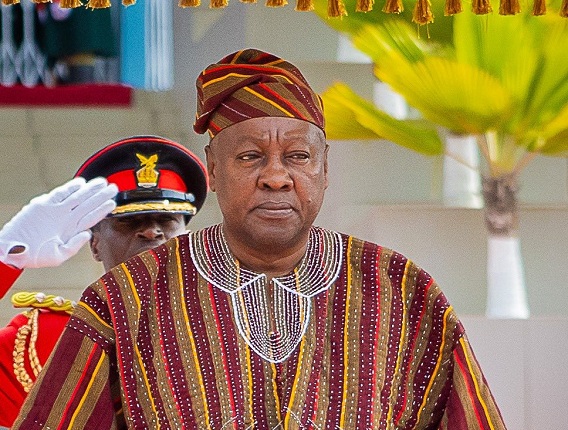


President John Mahama on Friday, February 27, delivered his second State of the Nation Address (SONA) of his second term.
Thank you, Right Honourable Speaker
Honourable Members of the August House
Your Excellency, Vice President Jane Naana Opoku-Agyemang
Your Excellency, the First Lady, Mrs Lordina Dramani Mahama
Your Lordship, the Chief Justice
The good people of Ghana
Ladies and gentlemen,
It is both a profound honour and a constitutional duty to appear before the House to deliver a message on the State of the Nation, as required by Article 67 of our Constitution.
I do so with the perspective earned through decades of public service, including my time in this very Chamber as a Member of Parliament and my previous term as President from 2012 to 2017. My journey in public service, like that of our nation, has not followed a straight path. It has been marked by periods of steady progress, by setbacks, and by determined recovery.
Mr. Speaker,
That pattern of resilience mirrors the national experience. And today, I stand before you to speak to another such defining moment, a moment of rebound, of national renewal, and of restored hope in our country's history. This moment is being shaped by hard choices, institutional resolve, and a renewed commitment to stability and national purpose.
Mr. Speaker,
In just a few days, on 6th March 2026, Ghana will celebrate 69 years of independence on the theme "Building Prosperity, Restoring Hope." This theme is not merely ceremonial. It is the blueprint that guides my administration's vision and action. It reflects where we have been, acknowledges the difficulties we have endured, and confidently declares where we are headed. At the heart of this vision are two complementary and mutually reinforcing agendas: the Resetting Ghana Agenda and the Accra Reset.
The Resetting Ghana Agenda is our national commitment to restore economic stability, rebuild public trust, strengthen institutions, and deliver tangible improvements in the lives of ordinary Ghanaians. It is about turning the page on years of mismanagement, confronting our challenges with honesty, and charting a new course anchored in fiscal discipline, transparency, and sustainable development.
The Accra Reset, on the other hand, is our continental commitment. It recognises that Ghana's prosperity cannot be separated from Africa's progress. It calls for a fundamental shift in how African nations relate to one another and to the world, from dependence to self-reliance, from fragmentation to integration, and from reactive postures to strategic leadership.
Mr Speaker,
These two agendas are deeply interlinked. We cannot build lasting prosperity at home without contributing to stability and growth across our continent. Equally, we cannot lead effectively on the continental stage if our own house is not in order.
Together, these frameworks demonstrate our determination to restore hope, not merely as a promise but as a lived reality for Ghanaians and Africans alike. As we build on the foundation laid in 2025, the first year of my return to the Presidency, we do so with clarity of purpose, unity of action, and confidence in our ability to deliver a future worthy of our people's sacrifices and aspirations.
Mr Speaker,
This moment of national renewal unfolds against the backdrop of a world in profound flux. The global order we once knew is being rapidly reshaped, and the so-called "rules-based international system" endures only as long as it protects the advantages of those who designed it.
Once emerging nations begin to operate within those same rules to rebalance power, the very architects of that order prove willing to relax their commitments. Ghana, like many nations, has learned this hard truth. We cannot respond to this new reality with fragmentation, hesitation, or continued dependence. History has long taught us that resilience and prosperity will not be handed to us—they must be built deliberately through cooperation, self-belief, and strategic alignment. The era ahead demands that Africa move from a posture of dependence to one of collective self-reliance.
Mr Speaker,
It is in this spirit that Ghana has sought to play a convening and catalytic role on the continent. In the middle of last year, our capital, Accra, hosted African Heads of State, policymakers, and development partners for a landmark Health Sovereignty Summit.
Together, we charted a new roadmap for healthcare financing and collaboration among African nations. The message was clear: Africa must take ownership of its health security, pool its resources, deepen collaboration, and design financing solutions that reflect our realities rather than external prescriptions.
Strong economies require healthy populations, and health sovereignty is inseparable from economic sovereignty. The same logic applies to trade, industry, and growth. Africa's future lies in dismantling artificial borders, removing bottlenecks that stifle commerce, and fully activating a common market that allows our goods, services, capital, and ideas to move freely across the continent.
No single African country, no matter how well-endowed, can thrive alone in this new global environment. Rather, when we work together, our combined markets, youthful population, natural resources, and creativity will constitute one of the greatest economic opportunities of this century. Africa must summon the courage to shape its own destiny. Building genuine sovereignty across Africa. The Global South requires a deliberate and disciplined plan, one that begins with:
- Unlocking the immense human and creative potential of our young people;
- Strengthening regional value chains to add value to what we produce;
- Mobilising domestic capital to finance our own development, and
- Speaking with a single, coordinated, and confident voice in global affairs.
Mr Speaker,
This is how Africa can move from promise to power, from participation to leadership, and from dependence to dignity. The path forward is clear. Africa must rise with confidence, unity, and purpose. Ghana stands ready not only to rebuild at home but also to work hand in hand with our African brothers and sisters to shape a future defined by shared strength, dignity, and prosperity.
Mr Speaker,
We have resolved here in Ghana to operate with our eyes open to protect our sovereignty and to design policies that place our people first. We will continue to engage with the world, but on terms that reflect our interests. We will uphold global norms, but we will not outsource our judgment. And we will build resilience at home so that shifts in external power do not translate into hardship for our citizens.
Mr Speaker,
When I last came before this House, I spoke candidly about the depth of the challenges we had inherited across all facets of our nation. Nowhere was this national malaise more evident than in the economy. We inherited an economy in severe crisis—burdened by unsustainable debt, high inflation, a rapidly depreciating currency, and an escalating cost-of-living crisis that had left our citizens reeling from unimaginable hardship caused by years of general imprudence and reckless management of the economy.
I was clear from the outset that recovery would not come easily. I was also clear that I would stop at nothing to turn the situation around and bring relief to Ghanaians. I promised that, just as I have confronted and overcome crises in the past, I would reset our economy and return us to a path of growth, progress, and development.
I told this August House when I appeared before you last year that we would have to take tough, prudent, and necessary decisions to restore stability and credibility. Today, I can say with confidence: Ghana is back. Ghana is working again and is open for business. The fundamentals are improving, and the path to sustained acceleration is clear.
From the outset, we resolved to choose discipline over waste, reform over excuses, and stability over speculation. As a responsible government, our first order of business was to halt the economic haemorrhage and restore order to our public finances. We tightened expenditure and commitment controls, improved payables reporting, and conducted a comprehensive audit of 2024 commitments to restore credibility and discipline.
These measures have begun to deliver some of the most remarkable economic outcomes in decades.
Mr Speaker,
As we approach the celebration of our 69th Independence Anniversary, we do so not only with pride in our past but also with renewed hope for our future. We are Building Prosperity through sound policy, responsible governance, and inclusive growth. We are Restoring Hope by delivering on our promises and proving that good leadership makes a measurable difference in people's lives.
The Resetting Ghana Agenda is working. The Accra Reset is gaining momentum. And together, they are laying the foundation for a stronger, more resilient, and more prosperous Ghana.
Mr Speaker,
Our nation is on the runway. It is in take-off mode, and you are all advised to fasten your seatbelts. The journey continues. But the direction is set. And the hope is real. Our theme today, Building Prosperity, Restoring Hope, is not merely aspirational. It reflects the tangible transformation we have delivered for the Ghanaian people.
Our economy has grown significantly. In 2025, Ghana’s GDP is expected to reach $113 billion, up from $83 billion at the end of 2024. This has placed Ghana among the top 10 largest economies in Africa. Average GDP growth for the first 3 quarters of 2025 is reported at 6.1%. But growth means nothing without discipline. Our primary surplus reached 2.6% of GDP, far exceeding our 1.5% target. Our fiscal deficit closed at 3.1%, well below the projected 3.8%.
This is not just prudent governance; it is promise-keeping. It has benefited households and businesses because we have borrowed less and spent more responsibly, interest rates have fallen, confidence has returned, and private businesses are breathing again.
Mr Speaker,
The 19th of December 2022 will go down as one of the darkest days in Ghana’s economic history. Ghana declared its inability to honour its debt obligations. We declared a debt default and placed a moratorium on both domestic and foreign debt repayments. Following this, we entered a protracted and complex debt restructuring process. Ghana’s debt became a shackle on our economic progress, dragging our nation into hardship and despair
Looking at Ghana’s restructured debt profile, it is clear the negotiators on our side were intent on kicking the can down the road, with the largest repayments scheduled between 2025 and 2028. We confronted this crisis with action, not rhetoric. We established sinking funds, restructured obligations, and pursued bilateral agreements.
The result? Public debt fell by GH¢82.1 billion, from 61.8% to 45.3% of GDP. This is one of the sharpest reductions in our history. We settled a US$709 million Eurobond ahead of schedule, completing US$1.4 billion in debt service for 2025. And the world noticed. Fitch, Moody's, and S&P all upgraded Ghana's credit ratings—the first triple upgrade in years.
Ghana’s credibility is restored. Ghana is rising. The heaviest burden we inherited was the very high inflation, which was silently eroding every household’s purchasing power. It peaked at 54.1% at the end of 2022 and declined to 23.5% by the end of 2024. We treated it as the emergency it was. Through fiscal consolidation, currency stabilisation, and disciplined monetary policy, inflation fell from 23.5% to 3.8% over 13 consecutive months by January 2026.
Food inflation fell by 26.6 percentage points. Inflation for locally produced goods fell by 22.6 points. These are not statistics, Mr Speaker. They translate into the reality of parents being able to put meals on the table for their children, and into the reality of businesses thriving and creating opportunities for Ghana’s youth. Petrol prices dropped from GHS15.20 to GHS10.70 per litre.
It recently dipped below the GHS10 mark for the first time in many years. Diesel fell from GHS15.40 to GHS11.30. This brought relief to our nation's 3.7 million car owners and tens of millions who depend on transportation daily.
Mr Speaker,
Exchange rate volatility has long been at the heart of the hardship Ghanaian households face. We made currency stability a priority, and we have delivered. We did not arrest the dollar; we strengthened the cedi to put up a good fight against the other currencies.
I am pleased to report to this House that the cedi appreciated by 40.7% against the US dollar, 30.9% against the pound, and 24% against the euro.
Mr. Speaker,
Ghana’s economic turnaround is broad-based and comprehensive. All sectors of the Ghanaian economy have witnessed remarkable improvement in the first year of my return to the Presidency. Most importantly, Ghana’s economy has surpassed the $100 billion mark and is projected to place Ghana among the top 10 economies in Africa.
Our reserves currently stand at $13.8 billion, covering 5.7 months of imports. A key driver of this development has been the establishment of the Ghana Gold Board. By formalising gold exports, we reduced smuggling, increased recorded exports in the artisanal and small-scale mining sector from 63.6 to 103 tonnes, and channelled foreign exchange into our economy. When the cedi stabilises, imported inflation falls. Businesses can plan more effectively, and household incomes improve.
Mr. Speaker,
As global uncertainty grows, it is necessary to reduce our country’s exposure to external shocks, break the cycle of economic downturns, and safeguard macroeconomic stability. Just last Wednesday, 25th February 2026, the Minister for Finance presented the Ghana Accelerated National Reserve Accumulation Policy to this House. The policy seeks to strengthen our country’s external resilience by increasing our international reserves to 15 months of import cover by the end of 2028, supporting long-term structural transformation while safeguarding macroeconomic stability.
Mr. Speaker,
We have an opportunity to build an economic war chest to withstand global economic shocks, secure macroeconomic stability, improve the standard of living for Ghanaians, and build lasting prosperity for future generations. This is what the policy seeks to achieve. We abolished the nuisance taxes levied on us between 2017 and 2024. These include the E-Levy, Betting Tax, and Emission Tax.
We have reformed VAT comprehensively by:
1. Abolishing the 1% COVID-19 Levy
2. Decoupling GETFund and NHIL from VAT
3. Reducing VAT from 21.9% to 20%
4. Raising the VAT threshold to GH¢750,000
5. Extending zero-rating on textiles to 2028
These fiscal reforms have effectively put GH¢6 billion back into the pockets of the Ghanaian. Interest rates have fallen from above 30% to about 18%, freeing up credit for businesses and households. According to the Ghana Statistical Service, over one million Ghanaians found employment between Quarter 1 and Quarter 3 of 2025, and 950,000 people escaped multidimensional poverty in the same period.
Mr Speaker,
I am pleased to report that our external position has strengthened significantly. By December 2025, our current account recorded a surplus of $9.1 billion, representing 8.1% of GDP. This is a remarkable increase from $1.5 billion, or 1.8% of GDP, a year earlier. This achievement has been driven by robust gold and cocoa exports and increased remittance inflows. This improvement demonstrates that our economy is gaining strength and resilience on the global stage.
Mr Speaker,
We have moved decisively from planning to action on our flagship 24-Hour Economy and Accelerated Export Development Programme.
Officially launched in 2025, this transformative initiative is designed to:
1. Unlock round-the-clock economic activity
2. Deepen value chains across key sectors
3. Boost productivity and support export growth, and
4. Create quality jobs in agriculture, manufacturing, logistics, and services.
On 6th February 2026, this august House passed the 24-Hour Economy Authority Bill, establishing the regulatory framework and legal mandate necessary for full implementation. Last week, at cabinet, I had the honour of signing this historic legislation into law. All is now set for take-off. This is the boldest economic transformation initiative in recent years.
GHS 110 million has been allocated in the 2026 Budget to begin implementation. These resources will enable businesses to operate beyond traditional business hours, attract private investment through strategic partnerships with the Development Bank of Ghana and the Ghana Infrastructure Investment Fund, and strengthen the foundations for sustained growth and job creation, especially for our youth.
This is about building prosperity and restoring hope through concrete action.
Mr Speaker, a nation that does not learn from past mistakes cannot get out of the cycle of problems that impose hardship on its citizens. We have just begun to emerge from the most devastating economic crisis in our nation's recent history. This crisis was triggered by general financial indiscipline, huge deficits and massive debt occasioned by persistent unbudgeted expenditure to meet the ends of convenient politicking.
In the last few weeks, we have had to take the painful but necessary decision to revise the producer price of Cocoa to achieve competitive pricing and resolve acute liquidity challenges in the sector.
Failure to do so would have meant pumping in billions of borrowed funds. This unplanned expenditure would have taken us right back to the very devastating economic problems we have only recently begun to escape.
So, while fully understanding the concerns and protests of our farmers, I can firmly assure them that the reforms announced by the government will bring about a total transformation of the sector and guarantee them a fair price that enables them to cover the cost of producing the commodity and make decent margins.
The difference between facing economic hardships and avoiding them is the exercise of sound economic judgement, and I am determined to make decisions that ensure our collective well-being and avoid suffering for all our citizens.
Mr. Speaker,
We are bringing legislation to this House to tighten our procurement processes by banning sole-sourced contracts, except in exceptional circumstances. We will also bring legislation to this House to make it mandatory to seek Parliament's prior approval before any government asset or property is leased or sold.
Last Tuesday, I caused the Minister for Finance to lay the Value for Money Office Bill before this august house. This is a landmark measure, a fulfilment of yet another campaign promise to the good people of Ghana, designed to decisively end waste, inflated contracts, abandoned projects, and chronic cost overruns that have, for far too long, drained the public purse.
All these measures are intended to improve public trust and accountability.
Mr Speaker,
In January 2025, we inherited an energy sector on the brink of collapse and precipitated by a severe financial crisis. The sector was burdened with a staggering GHS 80 billion in legacy debts, threatening the operational viability of key power producers. The $500 million World Bank Partial Risk Guarantee (PRG), a critical risk-mitigation instrument established in 2015 during my first term to safeguard nearly $8 billion of private-sector investment in the Offshore Cape Three Points (OCTP) field, had been fully exhausted due to prolonged non-payment for gas supplied.
At the distribution level, the Electricity Company of Ghana (ECG) was plagued by high commercial and technical losses, collecting only 62% of the energy it purchased and declaring less than 50% of its collections into the Cash Waterfall Mechanism (CWM). This resulted in severe liquidity shortfalls and power supply challenges throughout 2024. In the petroleum sector, years of policy inconsistency, regulatory inefficiencies, a lack of transparency, prolonged licensing processes, and unresolved legal disputes over field unitisation had eroded investor confidence.
Consequently, crude oil production declined by approximately 32% between 2019 and 2024, falling from 71.4 million barrels to 48.2 million barrels.
Mr Speaker,
I am pleased to announce that, as of December 31, 2025, the Government has fully repaid and restored the entire $500 million World Bank PRG, including interest. This has reinstated the facility in full and reaffirmed Ghana's standing as a credible and reliable partner on the global stage.
In addition, between January and December 2025, through carefully coordinated policy actions, the Government settled all outstanding gas invoices owed to ENI and Vitol, amounting to approximately $500 million. Ghana is now fully up to date with its gas consumption obligations to the Sankofa partners. The 2026 Budget has made adequate provision to ensure timely payments for all LNG going forward.
Mr Speaker,
To ensure equity and fairness, the Government has also held constructive engagements with Tullow Oil and the Jubilee Field partners and reached a comprehensive roadmap to guarantee full payment for all gas consumed. This approach supports reliable nationwide electricity generation and accelerates industrial growth. Engagement with upstream partners has resulted in increased gas production, guided by a clear national vision to rapidly scale up domestic gas supply and reduce reliance on expensive liquid fuels.
Beyond clearing inherited arrears, a robust framework has been established to strengthen monitoring and implementation of the Cash Waterfall Mechanism. Another major milestone was the operationalisation of the ECG Single Holding Account, overseen jointly by the Ministry and the Public Utilities Regulatory Commission (PURC). This intervention has significantly reduced revenue leakage and enhanced ECG's capacity to meet its payment obligations.
To address the high cost of power, the government has successfully renegotiated existing Power Purchase Agreements. Engagements with nine (9) Independent Power Producers (IPPs) have resulted in $250 million in immediate savings and $1.1 billion of debt restructured for payment in the period 2026–2028. The revised agreements will be submitted to Cabinet and Parliament for approval and ratification.
Mr Speaker,
Under the Rural Electrification Programme, 200 out of 400 communities have been connected to the national grid, with a further 100 at various stages of completion. The national electricity access rate now stands at 89.05%. We are committed to ensuring that every Ghanaian has access to reliable, affordable electricity. It is worrying that the Electricity Company of Ghana continues to experience high power losses, with reports indicating that around 25% of generated power is lost.
To address this phenomenon and anchor the gains we have made, adopting private-sector involvement, particularly in billing and collections, is the most effective way to significantly reduce these losses. Cabinet has approved the Multiple Lease Method for concessions in the distribution utilities, and work is ongoing to implement this critical reform.
Mr. Speaker,
The Bui Power Authority has completed an additional 50MW of solar plant. In the distributed solar sector, 30MW was achieved through rooftop installations, bringing the total installed capacity to 285MW and representing 5% of renewable energy in our generation mix. A few months ago, I broke ground for a 200 MWp solar power project at the Dawa Industrial Zone, with the first 100 MWp scheduled for completion in December 2026.
Mr Speaker,
The Ministry of Energy and Green Transition is constructing 35 mini-grids to serve 47 islands and lakeside communities in the Oti, Savannah, and Bono East regions. The ministry will also supply 12,000 new smart net meters from the end of the first quarter of this year, 2026.
Under the off-grid solar home systems for public institutions, delivery of materials for the first phase of 350 systems has commenced.
Mr. Speaker,
As part of the last-mile electrification effort to achieve 99.98% universal access by 2030, the ministry has mainstreamed mini-grids into the National Electrification Scheme (NES). Consequently, a feasibility study for the Afram Plains North District was completed for 100 communities, bringing the total number of islands and lakeside communities in the Afram Plains North and South to 150, ready for mini-grid electrification.
The African Development Bank has committed to providing $100 million to fund the construction of renewable energy-based mini grids for these communities.
Mr. Speaker,
I am pleased to announce that we have signed a Memorandum of Understanding with the Jubilee and TEN Field partners to commit $2 billion to additional investment in the Jubilee field. This will include drilling up to 20 new wells. There’s a second Memorandum of Intent with the OCTP Partners to commit $1.5 billion to additional investment in the OCTP field, the Cape Three Points Block 4 Contract Area, among others. This agreement will significantly increase Ghana's oil and gas production, thereby enhancing energy security, domestic demand, and infrastructure development.
Mr Speaker,
I am happy to announce that the government is on course to revitalise the Ghana Cylinder Manufacturing Company through a strategic partnership with the National Petroleum Authority, Ghana Gas, and the Ghana Commercial Bank (GCB). This will boost production, ensure a steady supply of safe LPG cylinders, and strengthen local manufacturing.
As you all know, the Tema Oil Refinery is back. The new management of the refinery has successfully completed extensive Turnaround Maintenance, and I am pleased to inform this August House that, for the first time since 2018, the refinery has commenced processing of crude oil.
Mr Speaker,
Let me assure our countrymen and women that the energy sector reform continues unabated. I remain fully committed to turning around the sector, strengthening its foundations, and ensuring reliable, affordable, and sustainable energy security for our nation.
Mr Speaker,
Agriculture remains central to our national renewal. Since January 2025, this administration has embarked on a decisive reset of Ghana’s agricultural sector under the Agriculture for Economic Transformation Agenda, with the Feed Ghana Programme serving as the flagship vehicle for implementation.
Our objective is clear: to restore food sovereignty, stabilise food prices, reduce import dependence, create decent jobs, especially for the youth, and reposition agriculture as a strategic growth sector under our 24-Hour economy policy. In January 2025, food inflation stood at 28.3 per cent, following an unprecedented peak of 61 per cent in January 2023. This situation placed severe pressure on households and undermined national stability. Today, food inflation has declined significantly to 4.9%, providing relief to Ghanaian families and businesses.
In addition, we have committed GHS 300 million to the National Food Buffer Stock Company to mop up excess produce, stabilise prices, and build a strategic national food buffer against emergencies, marking the first time Ghana has deliberately built a food reserve for national resilience. Over 413 institutions, from basic schools through to tertiary institutions, have been registered and are actively participating in the Feed Ghana Programme. Institutional farming is currently being undertaken by the Ghana Armed Forces, the Ghana Prisons Service, the National Service Authority, basic and second-cycle schools, public universities, and faith-based organisations, including churches and mosques.
A key pillar of the Feed Ghana Programme is the Home Gardening Initiative. Across the country, families are encouraged to grow vegetables at home and in their communities to reduce food expenditure, improve household nutrition, and enhance food availability. The Feed Ghana Programme is firmly anchored on Irrigation for Wealth Creation. The government is deliberately shifting agriculture from rain-fed dependence to irrigation-based farming to support year-round production and strengthen climate resilience.
Over the past months, processes have begun for the following interventions: the construction of 10 new small dams, the rehabilitation of 8 existing irrigation dams, and the construction of 250 solar-powered boreholes for farming communities and schools across the northern belt, Bono, and Ahafo regions. In addition, major irrigation schemes, including Vea, Weta, Tanoso, Kpong, Ashaiman, and Aveyime, are undergoing rehabilitation, while new inland valleys covering over 1,300 hectares are being developed to expand rice production.
Mr Speaker,
Under the Global Agriculture and Food Security Programme (GAFSP), we have launched a $20 million Agro-Input Distribution Project to strengthen food and nutrition security across the Northern Savannah Ecological Zone. The project is being implemented in 12 districts across six regions with a target of 50,000 farming households, including 30,000 women and youth. It will support the production of key staples: maize, rice, soybeans, cowpeas, and groundnuts, while promoting year-round vegetable cultivation through solar-powered micro-irrigation schemes for farmer groups and selected schools.
The project is also supporting backyard and commercial poultry production, as well as the distribution of fertiliser and certified seeds to participating districts. This will help strengthen the poultry value chain. We are working to fulfil the promise of establishing Farmer Services Centres across the country to modernise agriculture. Procurement processes are underway for a total of 660 tractors, 400 combine harvesters and more than 4,000 agricultural machines and implements.
The first 11 centres to be constructed this year will provide affordable access to land preparation, harvesting, storage, input supply, extension services, and equipment leasing, especially for smallholder farmers.
Mr Speaker,
Agricultural extension remains the backbone of productivity, and to address the current gap between farmers and extension officers, 540 motorbikes are being procured to improve extension coverage. 150 of the bikes have already been distributed. We are employing 400 Feed Ghana District Coordinators nationwide, while 10,000 young Ghanaians are being enrolled under a four-year National Service Agripreneur Programme, with annual absorption into permanent service. So far, 3,000 youth have been posted by the National Service Authority under the Agripreneur Programme.
This intervention is strengthening frontline service delivery and creating employment opportunities for young people. We are also placing farmer cooperatives at the centre of our agricultural transformation plan. As of October 2025, 70,000 Community Commodity-Focused Farmer Cooperatives had been established nationwide. They are serving as platforms for access to inputs, mechanisation, extension services, climate advisories, aggregation, and fair market negotiation.
The Government is actively linking farmers to agro-industrial investments to stabilise prices, create jobs, and accelerate Ghana’s journey towards food security. A major highlight of this effort is a €154 million Italy–Ghana irrigated commercial farming project to establish a 10,000-hectare irrigated model farm to produce rice, maize, soya, and tomatoes.
All produce from this project will be sold locally. This intervention is strategically designed to fast-track progress towards food security, ensure a reliable supply of raw materials for agro-processing, and reduce Ghana’s dependence on food imports.
Other key initiatives under the value-addition and agro-industrialisation drive include rice processing facilities in the Upper East Region, poultry feed production facilities in the Ashanti Region, and cashew and onion processing facilities in the Bono East Region. In addition, a 40-tonne-per-day soya processing plant is being established in Northern Ghana to support soybean farmers and reduce feed costs. The shea industry is also being revived through secured export contracts and measures to protect local raw material supplies.
Mr Speaker,
To reduce Ghana’s $300 to $400 million annual poultry import bill, the government has launched a comprehensive Poultry Farm-to-Table Project. These comprise 50 Anchor or Commercial Farmers producing 4 million birds, 500 SMEs producing 3 million birds, and a small-scale (Nkoko Nketenkete) backyard poultry Programme, targeting 3 million birds nationwide, with emphasis on women and youth.
The Nkoko Nketenkete Programme is underway. The target is to reach 60,000 households. Even before the launch, 720,000 birds were distributed during the pilot phase to 13,000 farmers in 12 districts. A poultry processing factory is under construction in Bechem to support expected production growth.
Mr Speaker, education remains pivotal to our national transformation agenda. In this regard, the year 2025 was both eventful and momentous for Ghana’s education sector. I am pleased to report that all flagship initiatives and commitments contained in our Reset Manifesto were faithfully honoured during the year under review. The No-Fees-Stress Initiative was successfully launched in Koforidua and has benefited over 152,698 duly validated first-year students in public tertiary institutions. The number of beneficiaries is projected to exceed 220,000 first-year students in the 2026 academic year.
In collaboration with the Student Loan Trust Fund, law students in Ghana can now access the student loan scheme to pursue legal education. The Free Tertiary Education Policy for Persons with Disabilities has also been launched and is now fully benefiting all eligible persons with disabilities enrolled in our tertiary institutions nationwide.
The 2025 academic year saw a stable, uninterrupted supply of quality food to all schools under the Free Senior High School Programme.
Mr Speaker,
To further deepen coordination, accountability, and effectiveness in the education sector, this honourable house passed several important pieces of legislation in 2025. These include:
1. The Kwame Nkrumah University of Science and Technology Bill, 2025,
2. The Ghana Scholarship Authority Bill, 2025,
3. The Change of Universities’ Names Bills, 2025,
4. The University for Development Studies Bill, 2025, and
5. The Ghana Education Trust Fund Bill, 2025.
To enhance private-sector participation in the tertiary education sector, new legislation will be introduced to ease regulatory bottlenecks and remove the requirement to charter, making it optional.
Mr Speaker,
Basic education remains the critical entry point into our education system. It is at this level that children acquire foundational literacy, numeracy, critical thinking, and problem-solving skills upon which all future learning depends. The government is, therefore, undertaking a major policy shift to rebalance our education investments in favour of basic education. As part of this shift, the Standards-Based Curriculum from Kindergarten to Primary Six is currently under review to incorporate robotics, coding, and the responsible integration of generative artificial intelligence.
Additionally, as part of the ongoing curriculum review, artificial intelligence education will be introduced in an age-appropriate and developmentally sensitive manner, with a strong emphasis on ethical use, digital responsibility, critical thinking, and human values.
Mr Speaker,
In response to the persisting challenge of schools under trees, the Government has programmed a bold and decisive intervention for the 2026 financial year. This includes the construction of 200 kindergarten blocks, 200 primary school blocks, and 200 junior high school blocks nationwide.
I am further pleased to inform this Honourable House that the Government has fully cleared all outstanding Capitation Grant arrears owed to public basic schools, as well as all outstanding BECE registration subsidies due to the West African Examinations Council for previous academic years.
Mr Speaker, education for learners with special needs is not only a moral right but also a sound, pragmatic investment that promotes equity and strengthens social cohesion. In recognition of this, the amended GETFund Act has established a dedicated, sustainable funding framework to implement Free Education for learners with special needs, beginning in the 2026 academic year.
The government has also increased the daily feeding grant for students in public Special Schools from GHS 8.00 to GHS 15.00 for the 2025/2026 academic year. This significant increment reflects our resolve to address the unique nutritional and health needs of learners with disabilities. In addition, Mr Speaker, we will construct a modern, state-of-the-art Special Needs School in Ho in the Volta Region, and rehabilitate and upgrade the existing Special Needs School in Akropong, Akuapem.
In fulfilment of our pledge to provide free sanitary pads to schoolgirls as part of efforts to improve menstrual hygiene and reduce absenteeism among female learners, a total of 12.2 million packs of sanitary pads were distributed to girls in public schools across the country in 2025.
We allocated GHS 292.4 million in the 2026 Budget to sustain this initiative. This commitment aims to remove gender-specific barriers to education and ensure that no girl’s education is interrupted due to challenges related to menstrual hygiene.
Mr Speaker, as part of efforts to decongest Senior High Schools, increase access and ensure parity in educational opportunities, the government will convert and upgrade 30 Category C schools to Category B, and 10 Category B schools to Category A. In addition, facilities in existing Category A schools will be upgraded and expanded.
Mr Speaker,
Technical and Vocational Education and Training (TVET) remain a critical pillar of our strategy to address youth unemployment and accelerate skills development. The government will construct six Regional TVET Centres of Excellence across the country to equip young people with practical, industry-relevant skills aligned with the demands of the evolving labour market.
There is also an ongoing review of the national curriculum to align with the OECD Future of Education and Skills framework. This will make TVET education more adaptive and resilient.
Mr Speaker, to expand access to higher education, support balanced regional growth, and meet the rising demand for quality tertiary education, we have entered international partnerships to establish two public universities—one in Kintampo, Bono East Region, and another in Jasikan, Oti Region. A grant has also been secured from China to establish a new public university in Damongo, enhancing access to tertiary education in underserved areas.
Mr Speaker,
Technical Universities play a critical role in closing skills gaps and reducing youth unemployment by delivering high-quality, industry-aligned, and practice-oriented training within a broader policy framework that stimulates labour demand. In this regard, the Government will establish three (3) new Technical Universities to strengthen skills development, enhance innovation, and support national industrialisation efforts.
The teacher’s housing initiative is a joint effort involving the District Assemblies’ common fund, GETfund, GNAT, and GESOPS to build 50,000 housing units for teachers. This partnership demonstrates our collective dedication to enhancing teachers’ living conditions, boosting retention—especially in rural and remote areas—and ensuring educators can live, work, and retire with dignity and security.
Mr Speaker, by prioritising equitable access and expanding infrastructure, we are investing in human capital and laying the foundation for a Ghana where every child can learn, grow, and succeed. Mr Speaker, by January 2025, Ghana’s health system was under severe strain. Ageing and deteriorating equipment, stalled hospital projects, amounting to GHS 15 billion in liabilities, and growing workforce pressures had weakened service delivery.
Over the past year, donor support declined sharply from 19% of total health spending three years ago to just 2.2% today, creating an annual financing gap of more than GHS 2.4 billion.
The withdrawal of support from programmes previously financed by partners such as USAID exposed vulnerabilities in essential supplies and services, particularly in remote and underserved communities. Faced with these realities, my government chose to act decisively.
In 2026, direct government funding will account for about 72% of total health spending, up from 56.8% in 2023. Core health allocations have risen to GHS 23.3 billion, and with National Health Insurance resources included, total health financing now stands at GHS 34.7 billion. This reflects our clear commitment to domestic financing and health sovereignty. At the same time, we have faced the growing burden of non-communicable diseases. Today, NCDs account for over 40% of all deaths in Ghana and remain a major cause of household poverty.
To address this, the government established the Ghana Medical Trust Fund (MahamaCares), the first nationwide financing mechanism dedicated to chronic and non-communicable diseases. Mr Speaker, the National Health Insurance Levy has been uncapped.
Claims payments are now timed, with facilities no longer waiting more than half a year for payment.
We have also finalised measures to increase provider tariffs by over 100% to reflect realistic costs. As a result of the increased trust, NHIS enrolment has risen from 57% at the start of 2025 to 66% today. Over the past two decades, Ghana’s health workforce density has risen from 16.6 per 10,000 people in 2005 to nearly 42 per 10,000 today, while public-sector health employment has doubled to approximately 200,000 workers. Yet significant challenges remain.
At the beginning of 2025, 103,000 trained health workers were still awaiting placement, employment, or enrolment on the payroll. Over the past year, 13,500 nurses and midwives, along with hundreds of doctors and pharmacists, were absorbed into the public payroll. Nursing trainee allowances have been regularised, application fees reduced, and the no-fee stress initiative introduced to ease access to training. Service conditions are being implemented to boost morale and retention.
Looking ahead, the government will expand recruitment and take necessary actions to add more health workers to the payroll. We will correct the maldistribution of health workers through targeted incentives for underserved areas. Let me use this opportunity to appeal to our gallant health workers to accept postings to our underserved areas, seeing it as a call to national duty, while we work to ensure they have an enabling environment.
Mr Speaker, we will also scale up specialist and advanced nursing training to match the country’s changing disease burden. New post-basic nursing programmes in Cardiology, Nephrology, Endocrinology, and Oncology Nursing will be introduced this year, while two existing ones – Emergency and Critical Care – will be scaled up. At least 30 nursing training institutions will transition to a competency-based degree curriculum, supported by new scholarship opportunities for PhD-level training for nurses and allied health professionals.
Mr Speaker, on health infrastructure, my government remains firm in its commitment not to abandon unfinished projects. We will continue to retool facilities, strengthen emergency and disease surveillance systems, and ensure that health infrastructure is properly aligned with staffing, equipment, and financing. In the 2026 Budget, provision has been made to commence Regional Hospitals in the Oti, Savannah, and Western North Regions, expanding access to quality care.
Aligned with the RESET Agenda, we are making strategic investments in local pharmaceutical and vaccine production. The government has allocated USD 50 million in seed funding to the National Vaccine Institute. In 2025, a local manufacturer secured market authorisation for a snake venom antiserum produced in Ghana. We are also finalising steps to implement an Advanced Market Commitment to prioritise locally manufactured vaccines, sera, and pharmaceuticals in public procurement.
Production of the Tetanus-Diphtheria vaccine is expected to commence this year through a partnership with an Indonesian pharmaceutical firm. Disease control remains a priority in our country. Immunisation financing has been strengthened. In 2025, the vaccine budget for children and pregnant women increased by 46%, exceeding GHS 171 million, enabling Ghana to fully and promptly finance its vaccines and reduce the risk of preventable outbreaks.
In 2025, we also introduced the HPV vaccine to protect girls and women against cervical cancer. Ghana’s HIV prevalence is estimated at 1.6%. There are about 350,000 people living with HIV/AIDS. Although prevalence is low, some population segments and regions have significantly higher incidence than the national average. The Ghana AIDS Commission has been tasked with ensuring the availability of testing and antiretroviral treatment.
This year, my government will fully roll out a Free Primary Health Care programme, removing cost barriers at the primary level where most health needs are met, while strengthening prevention, screening, and health promotion, especially for non-communicable diseases.
The Ghana Medical Trust Fund will be scaled up, and access to advanced cardiac care, including cardiac catheterisation services at Tamale Teaching Hospital, Korlebu Teaching Hospital and Komfo Anokye Hospital, will be expanded to reduce overseas referrals and position Ghana as a centre for specialised care in the sub-region, in line with our Medical Tourism agenda.
The Ministry of Health is expected to issue guidelines to eliminate the unacceptable “no-bed” syndrome observed in some of our health facilities. Patients facing medical emergencies must be received and given help, even under makeshift conditions. Government will expand capacity by implementing the Ridge Hospital phase II, completing the Police Hospital project and the La General Hospital. In the Ashanti region, the completion of the Sewua Hospital, the Aferi Military Hospital and the KATH Maternal and Children’s Block is on course.
Mr Speaker, we remain on course to build a stronger, more resilient, and more self-reliant health system for all Ghanaians.
In the road sector, we inherited a burden of significant financial obligations and structural pressures accumulated over the years. As of December 2024, outstanding payments on road projects financed through the Consolidated Fund stood at GHS 21 billion. These were certified works executed by contractors across the country for which payment had not been made.
In addition, indebtedness to contractors lodged with the Ghana Road Fund Secretariat and awaiting payment totaled GHS 5.43 billion. This figure excludes accruing interest charges, which continue to compound the State’s financial exposure. Beyond these arrears, we inherited contractual commitments totalling more than GHS 104 billion. These commitments represent signed contracts for road projects at various stages of execution - many without corresponding secured funding to guarantee timely completion.
Mr Speaker, by the end of 2025, the ministries of finance and roads had cleared arrears amounting to GHS 10 billion owed to road contractors, and they are steadily continuing to reduce sector debts. The Big Push Infrastructure Programme is my vision for a national infrastructure drive to restore critical roads, open economic corridors, create jobs, and reduce the cost of doing business.
Work has started on 50 road projects spanning 1,144 km under the Big Push initiative. The total estimated cost for these projects is GHS 50 billion. Meanwhile, government is also completing 23 projects awarded by the previous administration that were underfunded. These projects cover 573 km and are estimated to cost GHS 15 billion.
Across all 16 regions, 73 projects are advancing, with significant, visible progress expected by year-end. Some of the critical projects currently ongoing include:
1. Tepa-Mabang-Goaso
2. Kumasi by-pass road
3. Suame Interchange and local roads
4. Sunyani Outer Ring Road
5. Sampa-Jinijini Road
6. Techiman-Nkonsia-Wenchi
7. Dualization of Winneba-Cape Coast Road
8. Kwahu Tafo-Adawso Road
9. Dodowa-Afienya-Dawhenya Road
10. Gbintiri-Nakpanduri Road
11. Tamale Outer Ring Road
12. Wenchi-Sawla Road
13. Sawla-Wa Road
14. Bole-Chache and Bole Town Roads
15. Navrongo-Tumu Road
16. Tumu-Han-Lawra Road
17. Atimpoku-Ho Road
18. Ho -Denu Road
19. Dualization of Accra-Aflao Road Phase I
20. Dualization of Cape Coast-Takoradi Road
21. Dadieso Akontombra Road
Also, feeder roads like:
1. Akosombo-Gyakiti-Kudikope
2. Yeniam Junction-Sedorm
3. Apeguso-Mpakadan
4. Todome-Toh Kpalime-Dzemeni
Indeed, there are many other roads, too numerous to mention. As I said at the launch of the Big Push Programme, the whole of Ghana will be a construction site, and Ghanaians can testify that serious roadworks are underway across the country.
Mr Speaker, the Accra-Kumasi Expressway is a 198.7 km, six-lane, high-speed motorway designed to connect Ghana's two largest cities and is expected to reduce travel time to approximately 2.5 hours. This new alignment, with eight interchanges, will be Ghana's first true expressway.
The government has established the Accra-Kumasi Expressway Limited, a subsidiary of the Ghana Infrastructure Investment Fund, as the Concessionaire, mandated to design, finance, construct, operate, and maintain the Expressway and associated facilities, with the Ministry of Roads and Highways as the Contracting Authority. Project delivery is structured as a long-term concession of up to 50 years.
The Accra–Kumasi Expressway Project will be Ghana’s first purpose-built expressway, with limited access points, higher speed limits, and modern safety infrastructure to reduce travel time and improve road safety. Preparatory activities, including feasibility studies, detailed designs, and cost assessments, are underway.
This major road construction work aims to improve mobility, safety, and trade while connecting communities to markets and essential services. Now to the Eastern Corridor Road. We aim to complete all unfinished segments of that road by the end of 2027.
We will continue and complete the 27.7km Accra-Tema Motorway and Extension Project. This includes reconstructing the Accra-Tema Motorway into a four-lane expressway with a three-lane service road in both directions, and interchanges at the Ashaiman under-bridge, Community 18, and Teshie Link. It also involves remodelling the Tetteh Quarshie Interchange. Construction works are ongoing, and progress is 32%.
Other important projects include the Kumasi Inner Ring Road, the Volivo Bridge over the Southern Volta River, the Dambai Bridge over the River Oti, and the Adawso Bridge across the Afram River at Adawso.
The Ministry has received Cabinet approval to reintroduce tolling on roads and bridges nationwide, using advanced technology to improve efficiency, transparency, and revenue generation. Preparatory work is underway to ensure the reintroduction of tolling operations this year.
Mr Speaker, there is no doubt that an effective and efficient transport system is integral to any economic development plan. To improve public transport services in the country, government is supporting Intercity STC Coaches Limited (ISTC), Metro Mass Transit Limited (MMTL), and Private Road Transport Operators in renewing their fleets.
A total of 300 buses have been purchased to improve road transport. The initial batch of 100 buses is scheduled to arrive in the country by the end of the first quarter of this year.
Mr Speaker, in fulfilment of my pledge to re-establish a national airline, a ten-member task force established to oversee this initiative has submitted a business model and operational framework to guide the selection of a strategic partner for the National Airline. And it shall surely come to pass soon.
Passenger traffic handled by the Ghana Airports Company increased to 3.625 million in 2025, from 3.4 million in 2024. In response to rising passenger traffic and congestion at Accra International Airport's new Terminal 3, we are remodelling Terminal 2 into a dual-purpose facility to serve both domestic and international flights, thereby improving operational efficiency and enhancing the overall passenger experience.
Terminal 3 remains among the best in Africa. A new concourse will link Terminal 2 to Terminal 3, supported by a multi-tier 7-floor car park, an airport hotel, and retail amenities, as well as runway expansion and overlay.
We will begin work on new regional airports in Sunyani, Bolgatanga and Wa.
Mr Speaker, we are working to fully operationalise the Tema-Mpakadan rail line to maximise passenger and freight traffic between Tema and the North using the Volta Lake waterway. The Western and Eastern Railway Lines will continue to be modernised in partnership with the private sector. These projects aim to support the efficient transport of containers and bulk cargo to and from the ports, as well as to facilitate the efficient haulage of minerals from the mines in Nsuta, Awaso, and Nyinahin to the Takoradi Port, while providing passenger transport along the respective corridors.
Mr Speaker, as part of the 24-Hour Economy initiative, a new 24-hour operation has started at Tema Port, allowing access to port services around the clock. This development enables importers to clear goods at any time, significantly easing congestion at terminals like Transit, Reefer, and the Golden Jubilee Terminal. The initiative brings together customs, banking, and other relevant agencies to enhance efficiency, lower transaction costs, and boost Ghana's competitiveness as a major trade hub.
Cabinet has reviewed the designs and the feasibility study for the Keta Port and directed the Ghana Ports and Harbours Authority to present an action plan and a roadmap for the realisation of the project at the earliest possible time. Similarly, the Driver and Vehicle Licensing Authority, as part of its expansion effort, has established a new operational office at the Adenta Bus Terminal in Accra. This modern facility operates around the clock, providing continuous services to improve accessibility and convenience for motorists in the Adentan Municipality and nearby areas.
Mr Speaker, under the Rural Telephony and Digital Inclusion Project, implemented through the Ghana Investment Fund for Electronic Communication (GIFEC) to extend voice and data connectivity to unserved and underserved communities, we targeted the construction of 2,016 Cell Sites. 1,561 Cell Sites have been constructed. Of this number, 1,144 have been activated. Work is ongoing to activate the remaining 417 Sites. Preparations are also well underway to commence construction of the remaining 455 Sites.
Under the School Connectivity Initiative, over 62,000 digital resources have been uploaded to the Ghana Knowledge & Skills Bank, enabling seamless access across multiple devices—PCs, laptops, tablets, and smartphones—for more than 600,000 users including teachers, students, and researchers.
Mr Speaker, as part of the Government’s Reset Agenda to ensure Ghanaian youth acquire essential digital skills for the modern global economy, I launched the One Million Coders Programme in March 2025. The initiative aims to train 1 million Ghanaians in key digital areas, including Data Analytics, Data Protection, Cyber Security, the Metaverse, and Artificial Intelligence, over four years. Phase one of the Programme, the Pilot Phase, saw hundreds of trainees complete their training programmes in person across four training centres in Accra, Kumasi, Sunyani and Bolgatanga. Phase two, which will include virtual sessions, is set to commence this year, with expanded training centres and an increased number of beneficiaries. It is projected that 400,000 Ghanaians will be trained this year.
Fight against corruption.
Mr Speaker, this remains a defining priority of my government and represents a central pillar of our commitment to good governance, accountability, and the prudent management of public resources.
We have made progress through strengthened collaboration among law enforcement agencies, financial intelligence institutions, and prosecutors. These efforts have led to the initiation of criminal proceedings and asset forfeiture proceedings against some individuals and entities implicated in financial crimes against the State. But yes, I agree with the sentiments of Ghanaians that we must press harder on the accelerator.
As of December 2025, EOCO had recovered more than GHS 600 million. The Office has investigated 462 cases, with 15 currently under prosecution, and dismantled transnational car-jacking syndicates, recovering 29 luxury vehicles.
Mr Speaker, the Government remains resolute that corruption will not be tolerated, regardless of status or political affiliation. The Attorney General’s Office will continue to use both criminal prosecution and non-conviction-based asset recovery mechanisms to ensure that stolen public resources are returned for national development.
I understand that a large majority of Ghanaians are impatient to see those who abused their trust in office held to account.
There were periods when, under military regimes and unconstitutional governments, extrajudicial means could be used to exact retribution against persons perceived as corrupt or who had abused the public trust. This may have appeared as swift justice, but many regrettable excesses were recorded.
In 1992, we overwhelmingly adopted the 1992 constitution to accept governance by the rule of law. On 7th January 2025, I swore before the people of Ghana to uphold the 1992 Constitution. I may be as impatient as everyone else to see justice done, but painstaking investigations must be conducted, dockets must be prepared, charges must be filed, and the accused must have their day in court, including appealing even the smallest points of law to higher courts. This process is necessary to protect us all against abuse or ill-treatment of citizens and to ensure that only those guilty of offences against the state are punished.
As President Mills of blessed memory said, “The wheels of Justice grind slowly, but they grind exceedingly fine.”
Let me reassert my determination to uphold the accountability of public office holders to the people of Ghana. We have laid the Public Officers Code of Conduct Bill before Parliament. This bill codifies the conduct of public officers and makes breaches thereof punishable. I wish, at this juncture, to thank the Chief Justice for establishing specialised High Courts to address breaches identified in the Auditor General's report.
The constitution review process was conducted in a transparent, consultative, and participatory manner, drawing on input from constitutional experts, civil society organisations, traditional authorities, political parties, and the public. The review committee has submitted its comprehensive report, containing detailed proposals to amend the Constitution to address identified weaknesses and make it more welfare-enhancing.
The Attorney General’s Office is working closely with relevant stakeholders to translate the recommendations into implementable legal and constitutional proposals, which will be presented to Parliament in accordance with constitutional procedures.
Mr Speaker, illegal mining continues to pose a grave threat to our environment, water bodies, public health, and national security. Prosecution of persons engaged in illegal mining has been intensified with a renewed focus on dismantling organised criminal networks behind galamsey operations rather than targeting only low-level offenders.
In total, over 114 case dockets involving hundreds of accused persons are pending in various courts across the country, particularly in towns and villages prone to illegal mining. Specialised prosecutorial teams have been deployed to fast-track illegal mining cases, ensure the effective presentation of evidence, and pursue the confiscation and forfeiture of equipment and proceeds used in or derived from illegal mining.
Mr Speaker, my government will continue to ensure gender equality and equity, promote the welfare and protection of children's rights, and empower the vulnerable, the aged, and persons with disabilities for sustainable national development.
Work is well advanced on the Women’s Development Bank, for which a total of GHS 401 million has been allocated in the 2026 Budget. The coming months should see a full rollout of this monumental policy to empower Ghanaian women and women-owned businesses economically and financially.
Mr Speaker, the Ministry of Gender and Social Protection has successfully honoured the LEAP payment cycles for 2025, reaching 1.5 million people. It ensures the full implementation of the Ghana School Feeding Programme in over 12,000 public schools across all 261 districts of the country.
The number of beneficiary pupils has increased from three million, eight hundred and one thousand, four hundred and ninety-one (3,801,491) for the 2023/2024 academic year to four million, two hundred and thirty-one thousand, and fifty-nine (4,231,059) for the 2024/2025 academic year. The programme is providing gainful employment to 34,000 caterers and cooks nationwide.
Mr Speaker, in the security sector, Ghana faces evolving security threats. Our troops, services and agencies have, however, remained firmly committed to strengthening national peace and security, which underpin our democracy, development, and social cohesion. This commitment encompasses internal security operations, international peace support missions, strategic investments in infrastructure and retooling, and improvements in troop welfare, recruitment, and capacity development.
click here to read the full statement