Prime News Ghana

Today's Ghana Business, Banking and Economic news

Mobile money transactions hit GH¢493bn in April

Ghana’s mobile money ecosystem sustained strong growth in April 2026, with transaction value rising to GH¢493.2 billion, underscoring the deepening role of digital finance in payments, commerce and household transactions.

According to the Bank of Ghana’s May 2026 Summary of Economic and Financial Data, mobile money transaction value increased from GH¢365.0 billion in April 2025 to GH¢493.2 billion in April 2026, representing a rise of about 35.1 per cent over the period.

The number of mobile money transactions also increased from 778 million in April 2025 to 967 million in April 2026, showing that both the value and frequency of digital transactions continue to expand across the economy.

The data suggest that mobile money is no longer simply a retail payment tool but a central part of Ghana’s financial infrastructure, supporting person-to-person transfers, merchant payments, informal trade, utility payments, savings behaviour and small business transactions.

Registered mobile money accounts rose steadily from 75.2 million in April 2025 to 83.0 million in April 2026, while active accounts increased from 24.2 million to 26.0 million over the same period. ‘Active accounts’ are defined as accounts that have transacted at least once within the 90 days prior to reporting.

The agent network also expanded. Registered agents increased from 911,000 in April 2025 to 992,000 in April 2026, while active agents rose from 414,000 to 534,000. This points to a stronger distribution network and wider physical access to digital financial services, particularly in communities where bank branches remain limited.

The balance on float, which reflects funds held in mobile money wallets, also climbed from GH¢28.2 billion in April 2025 to GH¢36.7 billion in April 2026. This indicates that mobile wallets are increasingly being used not only for transfers, but also as short-term stores of value.

Mobile money interoperability also remained strong. Transaction value rose from GH¢4.0 billion in April 2025 to GH¢5.8 billion in April 2026, while the number of interoperability transactions increased from 23.1 million to 31.7 million. This shows growing use of cross-network transfers and a more integrated digital payments ecosystem.

The April 2026 data also shows that mobile money activity remains far larger than traditional cheque transactions. Cheque transaction value stood at GH¢36.6 billion in April 2026, compared with the mobile money transaction value of GH¢493.2 billion. This sharp difference highlights the scale of Ghana’s shift toward mobile-led payments.

The performance is also significant when viewed against Ghana’s broader digital payments landscape. GhIPSS Instant Pay recorded a transaction value of GH¢79.0 billion in April 2026, while internet banking transactions reached GH¢42.0 billion. Mobile money, however, remained the dominant payment channel by value and volume.


-Norvanreports-

Ghana's public debt rises to GH¢674bn

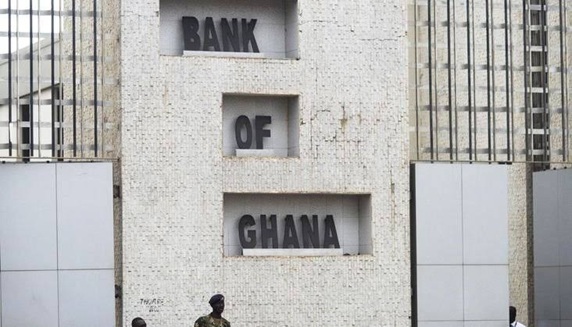
Ghana's total public debt rose to GH¢674.1 billion as of March 2026, equivalent to 42.2 per cent of Gross Domestic Product (GDP), driven by a combination of domestic borrowing, the cedi's depreciation against major currencies, and legacy obligations from previous years, according to the latest Summary of Economic and Financial Data released by the Bank of Ghana.

The debt stock, which stood at GH¢641.1 billion at the end of December 2025, increased by GH¢33 billion in the first three months of 2026 alone. The external component of the debt was recorded at GH¢313.6 billion (19.6 per cent of GDP), while domestic debt stood at GH¢360.4 billion (22.6 per cent of GDP).

The cedi's depreciation of 8.4 per cent against the US dollar between January and May 2026 has contributed significantly to the increase in the cedi value of external debt, even when the underlying US dollar-denominated obligations remained relatively stable.

External debt composition

External debt, measured in US dollar terms, stood at US$29.3 billion as of March 2026, largely unchanged from US$29.4 billion at the end of 2025. However, the weakening of the cedi from GH¢10.95 to GH¢11.41 per dollar during the period increased the cedi equivalent of this external debt by approximately GH¢13.5 billion.

The Heritage and Stabilisation Fund, set aside to cushion the economy against commodity price shocks, was valued at US$1.53 billion, equivalent to GH¢16.7 billion.

Domestic debt dynamics

Domestic debt increased by GH¢26.6 billion in the first quarter of 2026, rising from GH¢333.8 billion in December 2025 to GH¢360.4 billion in March 2026. This increase reflects new issuances of government securities to finance the budget deficit, as well as the capitalisation of interest on outstanding instruments.

The government has been actively issuing treasury bills and bonds to meet its financing requirements, with total public debt service obligations remaining a significant portion of annual government expenditure.

Debt-to-GDP ratio

Despite the nominal increase in the debt stock, Ghana's debt-to-GDP ratio of 42.2 per cent remains well below the 55 per cent threshold set under the Fiscal Responsibility Act, and significantly lower than the peak of 85 per cent recorded during the 2022-2023 economic crisis.

The improvement in the debt-to-GDP ratio from 53.8 per cent at the end of 2025 to 42.2 per cent in March 2026 is primarily driven by rebasing of nominal GDP, which increased the denominator in the ratio calculation. Annual nominal GDP was estimated at GH¢1,400 billion in 2025.

Fiscal deficit within target

The government's overall fiscal balance on a commitment basis recorded a deficit of 0.1 per cent of GDP in the first quarter of 2026, within the annual target range. The primary balance, which excludes interest payments, recorded a surplus of 1.2 per cent of GDP for the same period.

Total revenue and grants for the quarter stood at 3.6 per cent of GDP, while total expenditure was recorded at 3.9 per cent of GDP. Capital expenditure remained subdued at 0.5 per cent of GDP, reflecting the government's continued focus on fiscal consolidation.

Interest costs remain elevated

Despite the decline in interest rates across treasury instruments, the cost of servicing the public debt remains a significant burden on the national budget. The average lending rate fell to 16.33 per cent in April 2026, down from 27.40 per cent a year earlier, while the 91-day Treasury bill rate declined to 4.90 per cent from 15.47 per cent in April 2025.

However, the large stock of domestic debt means that interest payments continue to consume a substantial portion of government revenue, limiting fiscal space for capital investment and social spending.

IMF programme completion supports confidence

Ghana successfully completed its three-year IMF-supported Extended Credit Facility programme in early 2026, a milestone that has helped restore market confidence and improved the government's access to international capital markets.

The successful completion of the programme, achieved with all performance criteria met, has allowed the government to rebuild buffers and reduce its reliance on domestic borrowing. Gross international reserves stood at US$13.95 billion in April 2026, sufficient to cover 5.5 months of imports.

Outlook for debt sustainability

The government has committed to maintaining the debt-to-GDP ratio below the 55 per cent threshold and has outlined a medium-term debt management strategy focused on extending the maturity profile of domestic debt, reducing exposure to exchange rate risk, and diversifying funding sources.

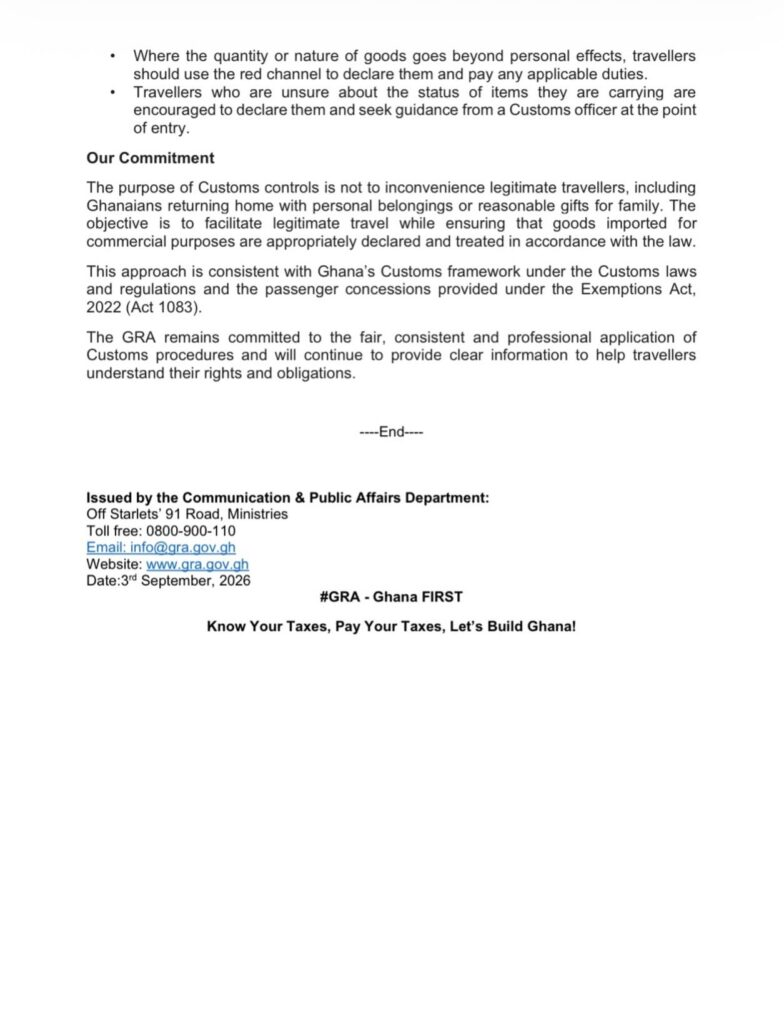
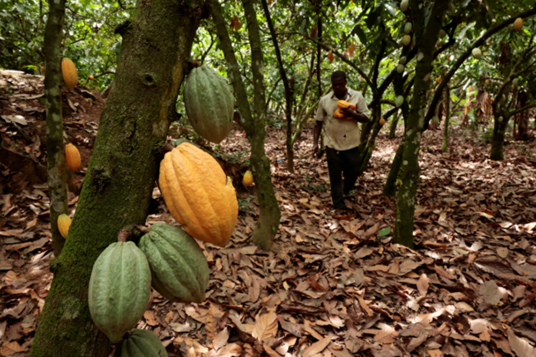
However, the sharp rally in crude oil prices, which surged 67.4 per cent year-to-date to US$103.20 per barrel, could pressure the external accounts and the cedi, potentially leading to higher-than-anticipated external debt service costs. Additionally, the 43 per cent decline in cocoa prices to US$3,350 per tonne will reduce export receipts and could widen the current account deficit.

The Bank of Ghana's continued accumulation of international reserves and the government's adherence to fiscal discipline will be critical to maintaining debt sustainability in the face of these external headwinds.


-Graphic-
 

IEA, Chamber of Mines split over Tarkwa lease extension

A sharp disagreement has emerged over the future of Gold Fields’ flagship Tarkwa Mine, exposing growing tensions between calls for greater Ghanaian control of strategic mineral assets and concerns over investor confidence in the country’s mining sector.