
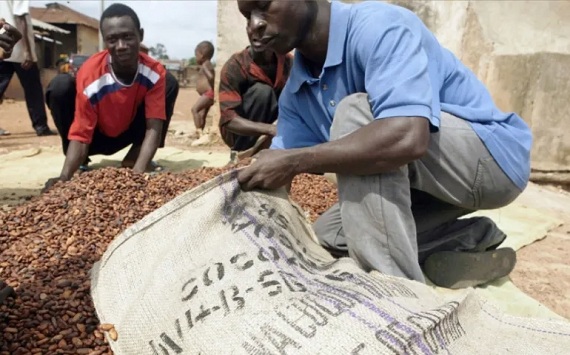


The government has directed the Ghana Cocoa Board (COCOBOD) to begin paying all cocoa farmers who are owed money with immediate effect, Finance Minister Dr. Cassiel Ato Forson has announced.
Speaking at a press briefing on February 12, Dr. Ato Forson said the directive followed an emergency Cabinet meeting held the previous day to confront the worsening crisis in the cocoa sector.
He revealed that Cabinet has approved a set of sweeping reforms aimed at ensuring farmers receive fair prices, restoring the financial health of the cocoa industry, and safeguarding its long-term future.
“To bring relief to unpaid cocoa farmers, Cabinet has directed the Ghana Cocoa Board to commence immediate payment to all affected farmers,” he said.
The emergency meeting, convened on Wednesday, February 11, 2026, reflects the urgency with which the Mahama administration is approaching the situation.
For months, thousands of cocoa farmers across the country have gone unpaid, with many reportedly struggling to afford basic necessities. Some have had to cut back on meals, withdraw their children from school, and neglect routine farm maintenance. There have even been reports of frustrated farmers detaining purchasing clerks over delayed payments.
COCOBOD is currently dealing with about 50,000 metric tonnes of unsold cocoa sitting at the ports, while Licensed Buying Companies (LBCs) are owed roughly GH¢2.04 billion (about $185 million) by the regulator.
The payment delays have been linked to several factors, including the collapse of international funding arrangements, a gap between Ghana’s farmgate price and falling global cocoa prices, and legacy forward sales contracts signed at historically low rates.
As part of the reform package, government plans to lay a new Cocoa Board bill before Parliament. The proposed law will introduce an automatic adjustment mechanism for producer prices, tying them to movements in global cocoa prices, exchange rates, and other key economic indicators.
Importantly, the bill will guarantee that cocoa farmers receive at least 70 per cent of the gross Free on Board (FOB) price.
Dr. Ato Forson said the reforms are designed to ensure fairness for farmers while putting the cocoa sector back on a sustainable financial path.