



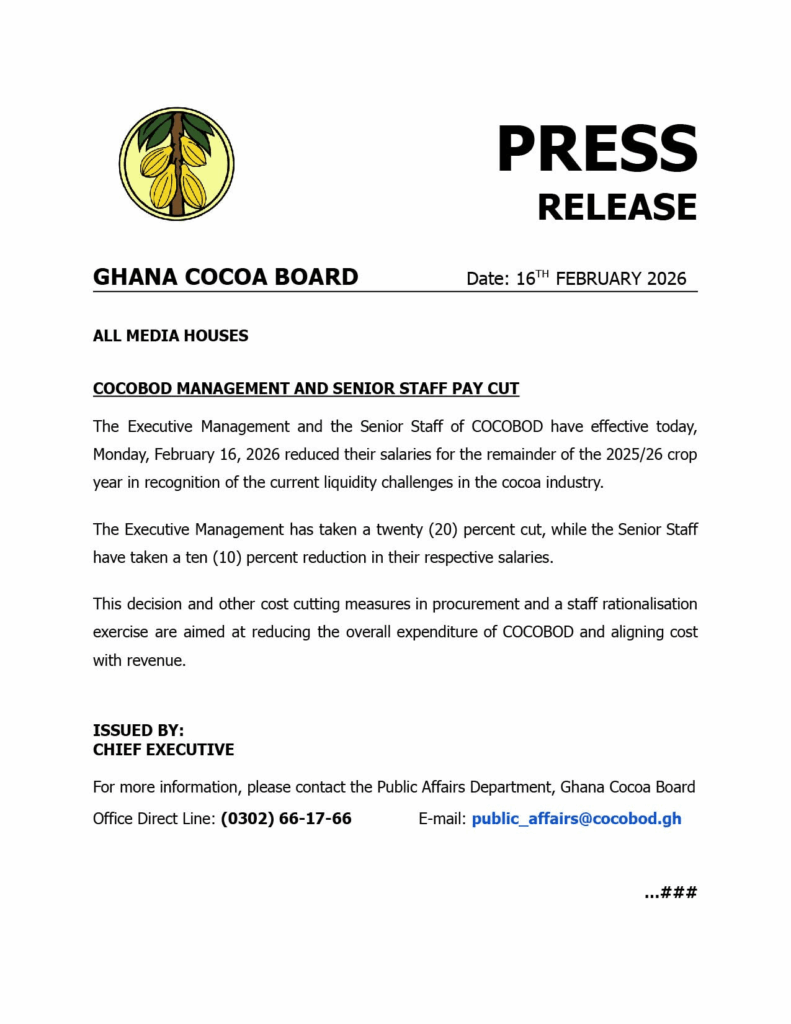
The Executive Management and Senior Staff of Ghana Cocoa Board (COCOBOD) have announced voluntary salary reductions for the remainder of the 2025/2026 crop season, citing ongoing liquidity constraints within the cocoa sector.
In a statement dated Monday, February 16, 2026, the institution disclosed that members of its Executive Management will take a 20 per cent pay cut, while Senior Staff have agreed to a 10 per cent reduction in their salaries.
According to COCOBOD, the move forms part of a wider strategy to trim expenditure and ensure that operational costs are better aligned with current revenue levels.
“The Executive Management and the Senior Staff of COCOBOD have, effective today, Monday, February 16, 2026, reduced their salaries for the remainder of the 2025/26 crop year in recognition of the current liquidity challenges in the cocoa industry,” the statement indicated.
Management explained that the salary adjustments, together with additional cost-control measures, are intended to ease financial pressure on the institution.
“This decision and other cost-cutting measures in procurement and a staff rationalisation exercise are aimed at reducing the overall expenditure of COCOBOD and aligning costs with revenue,” the statement further noted.
The development comes amid mounting challenges in the cocoa industry, including escalating operational expenses, concerns about farmer welfare, and heightened public scrutiny over producer pricing and the financial health of COCOBOD.
In recent weeks, debates surrounding cocoa producer prices and the long-term sustainability of cocoa farming have intensified. Analysts have also highlighted the heavy financial burden associated with cocoa purchases, administrative costs, and the effects of global price fluctuations on revenue streams.
COCOBOD’s leadership is presenting the pay cuts as a demonstration of shared responsibility at the top level, as the organisation implements broader restructuring efforts during the ongoing crop year.
The statement, signed by the Chief Executive, did not outline the exact size of the liquidity shortfall or the projected savings from the salary reductions. However, it confirmed that the pay cuts will remain in effect until the close of the current crop season.