
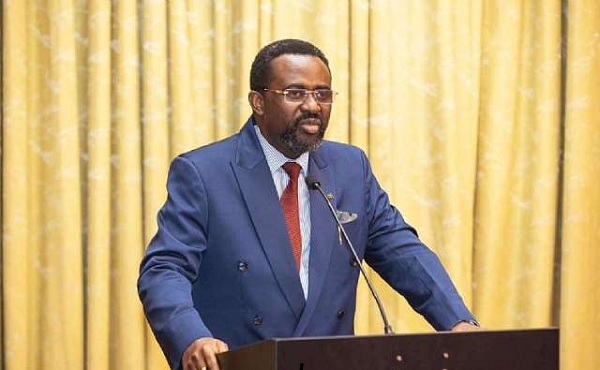


Dr Johnson Asiama, Governor of the Bank of Ghana, says reforms to the Ghana Gold Board (GoldBod) and the domestic gold purchase programme have strengthened external buffers and macroeconomic stability despite initial national costs.
Speaking at the opening of the 77th Annual New Year School and Conference at the University of Ghana on Tuesday, he said the GoldBod was now fully operational and embedded within the country’s macroeconomic framework.
“The Gold Board is no longer a concept; it is operational. It has reshaped how Ghana captures value from its gold resources while strengthening external buffers,” he said.
Dr Asiama explained that the domestic gold purchase programme was introduced at a time when Ghana faced acute vulnerability, with thin foreign exchange buffers and fragile confidence, and was designed to stabilise the currency and rebuild reserves by leveraging the country’s natural endowment.
He said that, in terms of its stabilisation goal, the programme had been crucial, noting that the Bank of Ghana intentionally bore the financial cost of the policy as a strategic choice in the national interest.
“The Bank of Ghana has had to carry the financial burden of such a national strategic policy, one that sought to restore confidence and protect the wider economy. Indeed, that was a deliberate choice taken in the national interest,” he stated.
Responding to public debate and criticisms over alleged losses under the Gold-for-Reserves arrangements, Dr Asiama said national priorities evolve and policies must be refined accordingly.
He disclosed that several corrective measures were implemented in 2025 to strengthen governance, transparency and risk management under the programme.
“These included the cancellation of the G4 Gold arrangement, refinements to the Gold-for-Reserves framework, reduced settlement risks through payment-before-release requirements, and the ring-fencing of off-take proceeds,” he said.
Dr Asiama explained that pricing structures were improved through reductions in discounts, agency fees and related charges, while coordination across the gold value chain had been enhanced through GoldBod’s institutional role.
He also announced the introduction of a gold foreign exchange auction mechanism to promote more structured and transparent intermediation of gold-related FX flows.
Looking ahead, Dr Asiama said the programme would be more firmly anchored within the broader Government of Ghana framework, with shared responsibility among key institutions to ensure sustainability.
“We encourage informed debate, evidence-based analysis and diverse perspectives on such critical national programmes,” he said, adding that the Central Bank, working with GoldBod and the Ministry of Finance, would convene a policy workshop with experts and market practitioners to further refine the programme in line with international best practice.
On the broader economy, Dr Asiama said the stability recorded in 2025 was an enabler for future growth. “
“If last year was about restoring confidence, then 2026 must be about putting that confidence to work productively,” he noted.
The 77th New Year School and Conference, hosted by the University of Ghana, brings together policymakers, academics, private sector actors and civil society to deliberate on Ghana’s sustainable development agenda, with a focus on strengthening institutions and translating economic recovery into inclusive growth.
The annual forum, which has shaped national policy debates since its inception, is expected to produce recommendations to guide government action in the year ahead.
GNA