


The Government’s Free Primary Health Care (FPHC) programme is now operational in 135 districts across all 16 regions, with 4,447 primary healthcare facilities currently providing services to communities.
The programme, which was launched in April, has moved into actual service delivery, with a focus on disease prevention, early detection and improving access to healthcare at the community level. The services covered under the programme include screening for blood pressure, blood sugar and other health risks, selected cancer and mental health screening, antenatal and child health services, immunisation, family planning, treatment for common illnesses, nutrition counselling and community outreach.
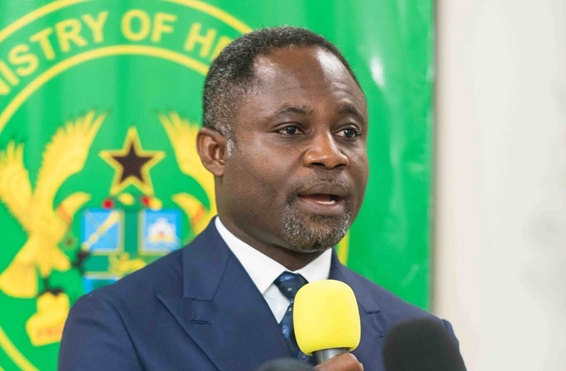
The Minister for Health, Kwabena Mintah Akandoh, announced this on Monday at a press conference in Accra.
He said Government had, within five months, trained health workers, equipped health facilities, released funds and established payment and client identification systems to support the programme.
He added that the programme seeks to change the country’s approach to healthcare by placing greater attention on preventing illnesses and identifying health conditions before they become severe.
The 4,447 facilities participating in the programme comprise 3,774 Community-based Health Planning and Services (CHPS) compounds, 632 health centres and 41 polyclinics.
Mr Akandoh said implementation initially focused on underserved districts, particularly communities in northern Ghana where access to healthcare remained limited.
He said healthcare services were also being taken beyond conventional health facilities through home visits and outreach programmes in communities, markets, schools and workplaces.
To support the programme, the government has distributed 24,534 pieces of essential equipment, more than 10,000 motorbikes and tricycles, and 5,000 outreach kits to health facilities. The Minister said the equipment and vehicles would enable health workers to provide preventive services directly to people within their communities.
He said 30 assembled health kiosks had also been handed over for deployment across six regions and 30 districts, including markets and transport stations. He reiterated that 30 additional health kiosks were expected to be completed by October 1, while 217 kiosks were targeted for completion within six months.
Mr Akandoh said the government planned to expand the kiosks to make basic healthcare services more accessible to people in their daily environments.
He cited the Mother Charles Walker Catholic Clinic in Atebubu-Amantin, where health workers are working with the Ghana Private Road Transport Union (GPRTU) to screen commercial drivers for hypertension, diabetes and other health conditions.
He said one driver was found to have a systolic blood pressure reading above 200mmHg and was prevented from driving that day with the support of GPRTU officials. At the Our Lady of Fatimah Health Centre in Abease, about 650 people received free care over a two-month period following the establishment of a dedicated FPHC unit.
The Minister also mentioned the Holy Family Polyclinic in Kulmasa, where nutrition education is being provided through practical food demonstrations.
He said the government had committed approximately GH¢79.624 million to the implementation of the programme as of September 5.
The funding includes GH¢35.1 million in Population-Based Payments for the first 106 districts, GH¢16.9 million in approved Ghana Health Service implementation funding, GH¢16.7 million in district training-related transfers and GH¢9.5 million transferred to the Ghana Health Service.
Mr Akandoh said the programme operates two payment systems, covering Population-Based Payments for preventive and promotive services and Ghana Diagnosis-Related Group payments for selected curative services.
He clarified that people do not need active National Health Insurance Scheme (NHIS) membership to access services covered under the FPHC programme. He said persons whose NHIS membership had expired could still be verified and served, while people with a Ghana Card but without NHIS membership could be issued an FPHC identification number.
Persons without both an NHIS membership and Ghana Card could also have their basic details recorded and be issued an FPHC identification number.
Mr Akandoh, however, said the FPHC programme was not designed to provide universal free hospital care.
He said patients requiring admission, surgery, specialist treatment and other higher-level services would continue to rely on the NHIS or the Ghana Medical Trust Fund, also known as MahamaCares, according to their respective areas of coverage.
The Minister said Phase One of the programme was designed to cover 150 districts, with 135 currently operational. He said the remaining districts would be added after meeting requirements for trained personnel, equipment, financing and service delivery capacity. A national implementation of the programme is targeted for 2028.
Mr Akandoh indicated that government would also distribute another 5,000 outreach kits and deliver an additional 12,000 pieces of equipment within a month.
He stated that the next phase of the programme would focus on medicines and supplies, stronger referral systems and measuring the impact of the services.
He said indicators such as the number of people screened, hypertension and diabetes cases detected, treatment initiated, referrals completed, pregnant women and children reached, patient satisfaction, medicine stockouts and out-of-pocket expenditure would be used to assess the programme.