
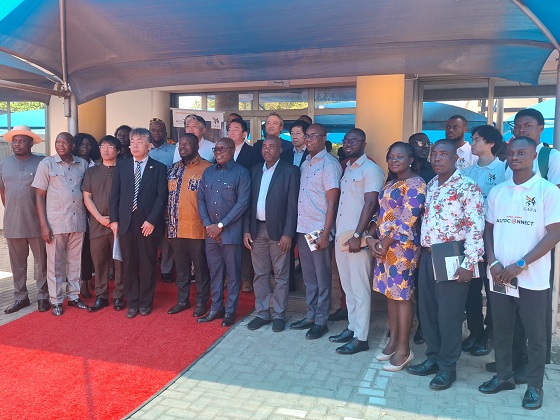


Ghana and Japan have launched a joint skills development programme to equip youth with technical skills in the automotive industry and expand international employment opportunities.
Mr George Opare-Addo, Minister of Youth Development and Empowerment, said at the launch that the initiative, called the Ghana–Japan Auto Connect under the Green Auto Factory Africa (GAFA) project, would strengthen technical and vocational education and prepare young people for emerging mobility technologies.
He explained that the programme was implemented through a partnership involving the Ministry of Youth Development and Empowerment, the Ghana TVET Service, and Green Auto Factory AICHI of Japan, with support from industry partners, including Toyota.
Mr Opare-Addo said participants would undergo three months of Japanese language training followed by six months of specialised automotive training, leading to a Level Three Automobile Mechanic Certification.
He noted that successful participants could also access internship and employment opportunities in Japan under future labour mobility arrangements.
The Minister stated that the project would support reskilling within Ghana’s automotive sector, which employs about 300,000 people and faces increasing demand for new competencies as the global industry shifts towards advanced and electric vehicle technologies.
He said the initiative formed part of the government’s broader efforts to strengthen youth skills development and reduce unemployment.
“As a Ministry, our mandate is clear – to empower young people with the skills, opportunities and resources necessary to become productive citizens and drivers of national development,” he said.
Mr Opare-Addo added that evolving mobility technologies required urgent reskilling within the sector to prevent job losses and encouraged young people to embrace technical and vocational careers, stressing that practical skills could offer sustainable livelihoods.
Mr Hiroshi Yoshimoto, Japanese Ambassador to Ghana, said the initiative demonstrated Japan’s commitment to supporting Ghana’s human capital development.
“Today’s event marks an important step forward in strengthening Ghana’s human resources, which is one of the foundations for sustainable development,” he said, adding that the project would bridge the gap between classroom learning and industry requirements by providing practical, industry-relevant training.
He said the GAFA initiative was expected to promote technical skills development, strengthen international partnerships and improve employment prospects for Ghanaian youth.
GNA