
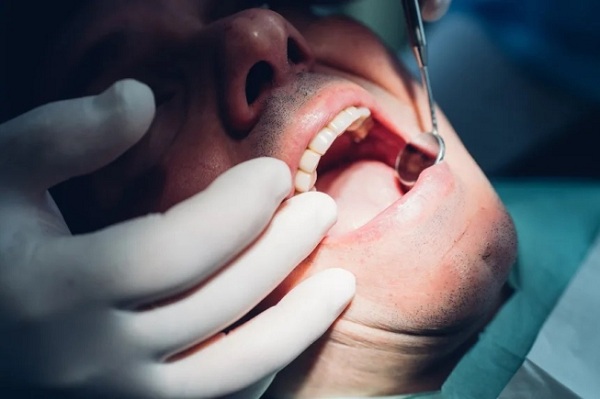


Dentist Ellyce Clonan can tell when her patients are stoned.
“I can smell it on them, and then there’s the red eyes and dry mouth,” said Clonan, a clinical assistant professor at the University at Buffalo School of Dental Medicine in New York.
“If I ask, some patients will tell me, ‘I’m so scared of going to the dentist, I had to come stoned,’” she said. “While we love to get folks into our chair for regular checkups, most people don’t understand the oral health dangers of using marijuana, especially on a regular basis.”
A 55% greater risk for cavities. A 41% increased risk for tooth loss. And a threefold higher risk for mouth cancers — this little-known fallout has been documented in a growing number of studies exploring the link between marijuana use and a healthy mouth.
When it comes to lung and oral cancers, most people think of tobacco, a proven culprit. However, a July study that explored California hospital records found people with cannabis use disorder — characterized by daily use that’s hard to stop — were more than three times more likely to develop lip and tongue cancers over the next five years.
“Our analyses suggest that cannabis exposure itself impacts risk of oral cancer,” said study author Raphael Cuomo, a biomedical scientist and professor of medicine at the University of California, San Diego.
A possible reason? Tetrahydrocannabinol, or THC, the part of the marijuana plant that makes you high, may suppress immune responses in mouth and nose tissues exposed to smoke, Cuomo said in an email.
And just as in tobacco smoke, there are volatile compounds in a puff of marijuana that can harm sensitive tissues in the mouth and lungs.
Experience Honest comfort
Ammonia, which can cause nose, throat and respiratory tract irritation, is often added to tobacco products to increase the body’s absorption of nicotine and make tobacco more additive, the US Food and Drug Administration states on its website.
“Ammonia was twenty times higher in marijuana smoke” than tobacco, Cuomo said via email.
Marijuana also has much higher levels of hydrogen cyanide — a toxic chemical used for fumigation and the manufacture of plastics and pesticides — as well as organic compounds called aromatic amines that are potentially carcinogenic, according to Cuomo.
While more studies are needed to prove that marijuana smoke can cause mouth cancers, the reality is that breathing in a burning material of any kind is not good for the lungs and mouth, said Clonan, who led a January study that found a high risk for cavities and tooth loss among marijuana users.
“You’re putting fire directly in your mouth,” she said. “I’d love to know what edibles as a route of cannabis delivery are doing to the mouth, but we don’t have research on that yet.”
Marijuana and anesthesia don’t mix
There are additional dangers of being high at the dentist — marijuana use can dramatically affect the body’s response to the anesthesia used to numb the mouth before procedures.
Studies have shown people who use weed regularly or on the day of surgery needed additional anesthesia and experienced more pain and complications after medical procedures. Then there is the impact on the heart — using marijuana can double the risk of dying from heart disease, even among young, healthy people with no history of heart trouble.
“Marijuana has been shown to increase blood pressure and heart rate, and because we use local anesthetics with epinephrine, there’s always a risk,” Clonan said.
Epinephrine, or adrenaline, is added to lidocaine and other dental numbing solutions to shrink blood vessels, reduce bleeding and prolong numbness. For people who have uncontrolled blood pressure and heart disease, dentists may opt for a different anesthetic.
“Cannabis has been shown to increase people’s anxiety,” Clonan said. “So, if people are panicky in the chair, if their blood pressure is already increased, their heart rates already increased, that’s an additional risk.
“However, I don’t think it would be as risky as if someone was going under via nitrous oxide or sedation, where cannabis has been shown to create additional concerns,” she added.
New York City orthodontist Dr. Austin Le, who is also an assistant research scientist at New York University’s Langone Health, said he would be concerned with “administering any type of anesthesia for people that are not fully sober or heavy users of any drugs.”
“You’re worried about drug interactions or you’re just worried about the body responding in a very bad way, causing an emergency in the chair,” said Le, lead author of a 2022 study that found young marijuana users between the ages of 12 and 25 were more likely to have oral lesions, grind their teeth and eat sugary foods during the “munchies.”
Marijuana and dental hygiene
Speaking of munchies, getting high can also lead to behaviors that contribute to dental decay and damage.
“Cannabis users are usually snacking on carbohydrates and foods with sugar that are definitely known to increase your risk of cavities,” Le said. “Marijuana can also make people more lethargic and less likely to floss or brush their teeth on a regular basis.”
The dry mouth that can accompany smoking weed is also a risk factor.
“When the mouth gets really dry, it limits the buffering capacity of saliva,” Clonan said. “Saliva helps wash away whatever plaque and food products are in your mouth, prevents plaque from sticking and the formation of cavities. So, we want our mouth to be filled with saliva, not dry.”
Despite all these concerns, most people are unaware of the dangers of using marijuana before entering the dentist’s chair, experts say. Even dental professionals can be at a loss.
“It’s kind of uncharted territory,” Clonan said. “What do you do when a patient comes in who is suspected of using cannabis in your office, and how are you going to treat them?
Clonan, who teaches young dental students, now suggests dentists add questions about marijuana use to the medical questionnaires that patients fill out during intake.
“We want you to tell us if you use so you can be safe when you visit us,” she said. “We also want to advise you to take extra precautions with your teeth — brush two times a day, drink more water, come to the dentist every six months, minimize snacking and limit sugar.
“We’re asking about your marijuana use out of kindness and out of a place of understanding. We’re not passing judgment.”
CNN