
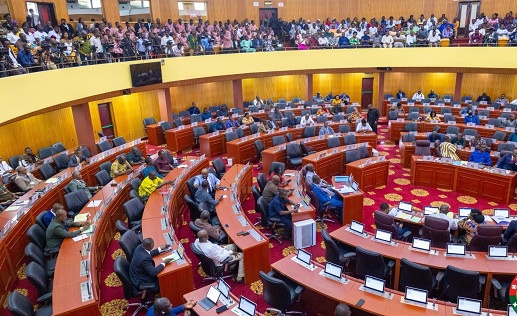


Parliament on Thursday, January 5, 2026, adopted the report for the establishment of the 24-Hour Economy Authority, paving the way for legislation that seeks to transform Ghana’s productive sector.
The Authority will serve as a coordinating Secretariat to liaise with Ministries, Departments and Agencies (MDAs) to drive economic transformation through enhanced production systems and supply chain management.
During the debate on the adoption of the report, Mr. Mahama Ayariga, Majority Leader and Member of Parliament for Bawku Central, said the legislation was designed to tackle the crisis of youth unemployment and empower the private sector to spearhead job creation.
He explained that one of the key pillars of the initiative was Production Systems Development Transformation and Supply Chain Management, stressing that the Authority would not serve as a vehicle for the 24-Hour Economy itself, but rather as a coordinating Secretariat working across sectors to deliver transformation.
However, Mr. Kojo Oppong Nkrumah, Ranking Member on the Economy and Development Committee of Parliament and Member of Parliament for Ofoase Ayirebi, expressed strong reservations.
He argued that the establishment of the Authority amounted to duplication of functions already performed by existing ministries such as Trade and Agribusiness, as well as agencies like the Ghana Export Promotion Authority.
Mr. Oppong Nkrumah described the initiative as “unnecessary and duplication,” adding that government’s ambition of creating jobs through the 24-Hour Economy was a “fallacy.”
He further criticized the late submission of the 24-Hour Economy Policy document to the House, urging the Majority Caucus to ensure timely delivery of future policy documents to allow for proper scrutiny.
The adoption of the report marks a significant step toward the consideration of the bill, which is expected to be debated further before passage into law.
The 24-Hour Economy policy was one of the major campaign promises of the then opposition National Democratic Congress to create “three shifts, one job system” for Ghanaians.
GNA