
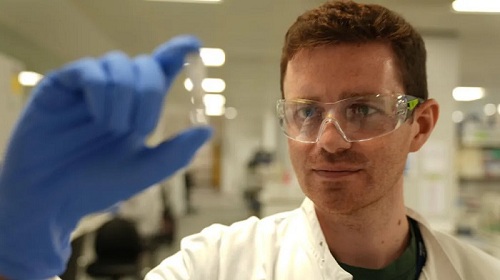


A new vaccine to tackle Ebola will now be tested on people after the UK regulator gave permission for trials to take place.
Scientists at the University of Oxford started developing the vaccine eight weeks ago when a public health emergency was declared on 17 May.
It is the first - out of four vaccines under development - to enter clinical trials.
Volunteers are being recruited, with the first doses expected to be given to healthy adults in the UK "within weeks".
The Ebola epidemic, centred on the Democratic Republic of the Congo has killed 625 people with 1,792 laboratory confirmed cases.
It is caused by the Bundibugyo species of Ebola, which has started two outbreaks before.
The six different species of Ebola are known as "sisters rather than twins" because while they are similar, they need separate treatments and vaccines. It means there are no approved drugs or vaccines this time.
The outbreak is still not under control and is taking place in a conflict zone with very mobile populations – heightening the need for a vaccine to help stop the spread of disease.
Dr Katrina Pollock, the chief investigator of the trial based at the University of Oxford, told the BBC: "We're doing phase one (early stage) trials of new vaccines all of the time, precisely to be ready for exactly this kind of outbreak."
The trial will be on 50 healthy adults aged 18-55. Researchers are also working with partners in Uganda to prepare for trials in Africa.
Volunteers will be monitored for a year, but scientists should know quickly whether the vaccine is producing the right kind of immune response or any unexpected side effects.
The Oxford team have been able to develop their vaccine in a matter of weeks because they are using the same technology that shot to fame during the Covid pandemic and was used in the Oxford/AstraZeneca Covid vaccine.