
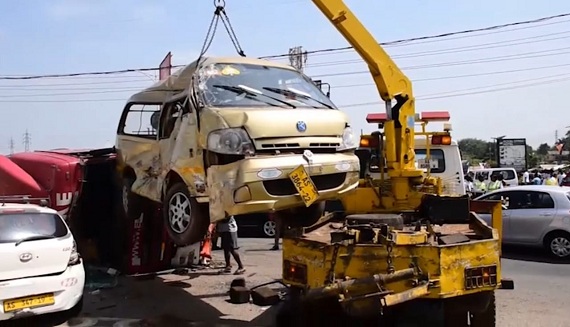


The Ashanti Region has seen a troubling decline in road safety in 2025, with a notable spike in road crashes, fatalities, and injuries compared to 2024, as revealed by the latest data from the National Road Safety Authority (NRSA).
The figures, which span from January to December 2025, indicate that total road crashes surged by 11.1 per cent, jumping from 3,986 in 2024 to 4,430 in 2025.
Road traffic fatalities also increased by 10.5 per cent, with 692 deaths reported in 2025, up from 626 the year before.
It is imperative to note that the Ashanti region recorded highest fatality among the 16 regions followed by Eastern region with 649 deaths.
Injuries experienced the most significant rise, soaring 13.7 per cent from 4,835 to 5,498.
Mr. Kwasi Agyenim Boateng, the Ashanti Regional Head of the NRSA, who shared the data with the Ghana News Agency in Kumasi, pointed out that, these trends highlighted persistent issues in enforcement of Road traffic regulations, inadequate road safety infrastructure on certain sections of the major arterials in the region, and the irresponsible behavior of some road users throughout the region.
A closer look at the data reveals that the Ashanti (Central) Police Region, which encompasses the Greater Kumasi and its peripheries, had the highest number of crashes, accounting for 2,927 incidents in 2025.
Although injuries increased by 307 cases, fatalities in this area remained relatively stable, with just one additional death.
Ashanti Region (Central) recorded significant pedestrian related knockdowns and fatalities.
Key urban areas like Manhyia, Suame, Tafo, Asokwa, Sofoline and Kwadaso have been flagged as high-risk zones due to significant pedestrian traffic, commercial vehicle activities, motorcycle and tricycle related activities, trading on pedestrian walkways and general vehicular congestion.
On the other hand, the Ashanti North Police Region turned out to be the deadliest, experiencing a 30.6 percent rise in crashes and a shocking 64 percent increase in fatalities, from 104 deaths in 2024 to 171 in 2025.
Injuries in this region also climbed by 47 per cent.
The NRSA attributes the alarming fatality rate to factors like speeding, inadequate enforcement of Road traffic regulations, pedestrian exposure on rural highways, broken down of Heavy Goods Vehicles, especially along the Ejura–Mampong–Offinso- Akomadan route.
Meanwhile, Ashanti South saw a 17 per cent increase in crashes and an additional 110 injury cases, although fatalities saw a slight decline.
Routes such as Yaw Kwei – Juaso and Bekwai – New Edubiase corridors are also noted for speeding.
Mr. Boateng noted that the growth in motorcycle and tricycle use continues to exert pressure on road safety efforts in the area.
The data further shows that motorcycles and tricycles are now major contributors to road crashes, with motorcycle crashes increasing by 22 per cent and tricycle crashes surging by 49 per cent in 2025.
Ashanti Central alone recorded 185 additional tricycle crashes, reflecting what the NRSA describes as weak regulation of the rapidly expanding road transport system.
Mr. Boateng stressed that the figures underline the urgent need for targeted road safety enforcement along high-risk corridors in the region, increased road safety education, improved road safety infrastructure, stricter regulation of motorcycles and tricycles and intensification of pre-trip inspections on commercial vehicles to reverse the trend in 2026.
GNA