
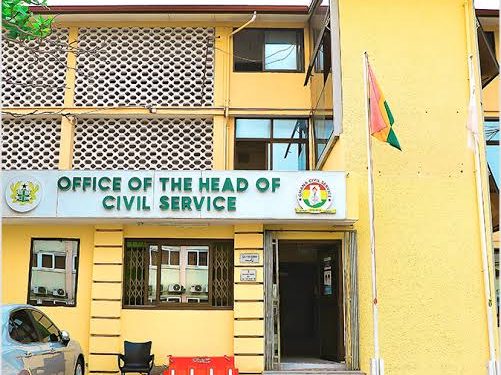


The Office of the Head of the Civil Service has directed Chief Directors and Heads of Departments to encourage staff who are unable to safely commute to work because of flooding in parts of Accra to work from home.
The directive, issued on Monday, June 29, follows heavy flooding across several parts of the capital and aligns with the advice from the Minister for the Interior urging residents to “stay home if you have not yet left home.”
In a notice addressed to Chief Directors and Heads of Departments, the Head of the Civil Service urged management to prioritise the safety of public sector workers by discouraging them from taking unnecessary risks to travel through flooded areas.
Staff members who are unable to report to work were advised to keep their supervisors informed of their well-being while working remotely.
The notice also encouraged workers requiring emergency assistance to contact the National Disaster Management Organisation (NADMO) through its toll-free emergency numbers, 112 or 192, as well as other relevant emergency services where necessary.
The directive comes as authorities continue to monitor the flooding situation in Accra and urge the public to exercise caution until conditions improve.
Read the full statement below:
NOTICE TO ALL CIVIL SERVICE STAFF
Good morning CDs and HoDs
Please, due to the flooding affecting many parts of Accra, you should encourage your staff who are unable to safely travel to work from home today consistent with the directive from the Minister for the Interior that; “Stay home if you have not yet left home”.
Advise Staff to prioritize their safety and avoid taking unnecessary risks by attempting to travel through flooded areas.
Kindly encourage them to keep their supervisors informed of their well being and call the Nadmo toll free numbers (112 or 192) and other emergency numbers where necessary.
Thank you for your kind attention and please stay safe.
Thank you.