


The Institute of Industrial Research of the Council for Scientific and Industrial Research (CSIR-IIR) is leading efforts to establish Ghana’s first Electric Vehicles (EV) Centre of Excellence.
Dr Francis Boateng Agyenim, the Director, said in pursuance of that agenda, a land had been secured at the Institute’s premises in Accra, Ghana’s capital, for construction works to begin, aiming to advance research, capacity-building, testing, servicing and repair electric vehicles.
The project is scheduled to be completed in 18 months.
The Centre has been designed to strengthen the nation’s shift towards the adoption of EVs fueled by the need for sustainable transportation, growing environmental awareness, and economic factors, the Director told the Ghana News Agency (GNA) in an interview.
Dr Boateng Agyenim, giving a briefing on the Institute’s response to the emerging trends in the transportation industry, indicated that the Centre on completion, would also seek to guide the government on policy direction, helping to build local expertise in EV maintenance and repair as the market evolved.
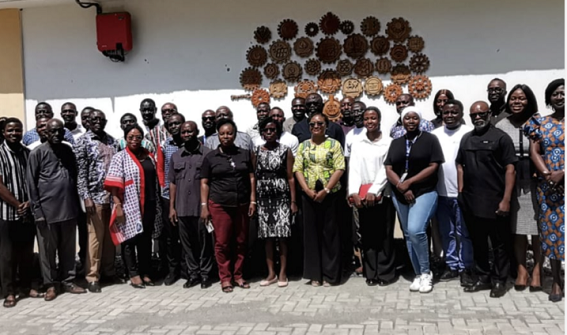
This was on the sideline of the CSIR-IIR’s Biennial Research and Industry Meeting (BI-ARIM) 2026, in Accra, which showcased some engineering novelties by the Institute meant to contribute to national development and growth.
Currently, the Institute is promoting and pursuing research and development in the areas of renewable energy technologies, industrial processes, new materials, improved sanitation, local equipment fabrication and emerging information/Communication technologies.
The Meeting was on the theme, “Advancing Industrial Sustainability through Innovation, Partnerships and Technology Transfer”.
In recent years, Ghana’s EV market has seen significant progress.
While in its early stages, compared to more established markets, the enthusiasm of early adopters is driving meaningful change.
Urban professionals, eco-conscious individuals, and some businesses are leading the charge, especially in cities like Accra and Kumasi, where EVs have become a more common sight.
Proponents of the mass adoption of EVs in the country say the improved grid reliability and the increasing use of renewable energy – such as from the Bui Hydroelectric Dam – make EVs a practical choice for daily use.
Dr Boateng Agyenim said the government’s push to expand renewable energy aligned perfectly with the rise of EVs.
This synergy between clean energy and clean transportation did not only amplified the environmental benefits but also ensured a reliable support system for the growing market, he noted.
In 2023, Ghana launched the new Electric Vehicle (EV) Policy to create an enabling environment to drive electric vehicle uptake in the country.
The National Electric Vehicle Policy has been designed to provide market signals and help to decarbonize the transport sector in line with Ghana’s National Energy Transition Plan 2022- 2070 and global commitments on climate change.
The core values and principles of the policy include health and safety in the use of EVs, equity and fairness, circular economic principles and practice, battery recycling and inclusivity.
At this year’s CSIR-IIR biennial meeting, the Institute showcased the impactful work of the scientists, the technologies developed, and building leverages for commercialisation.
It also featured the programmes and upcoming initiatives that would drive industrial growth and technological advancement.
GNA