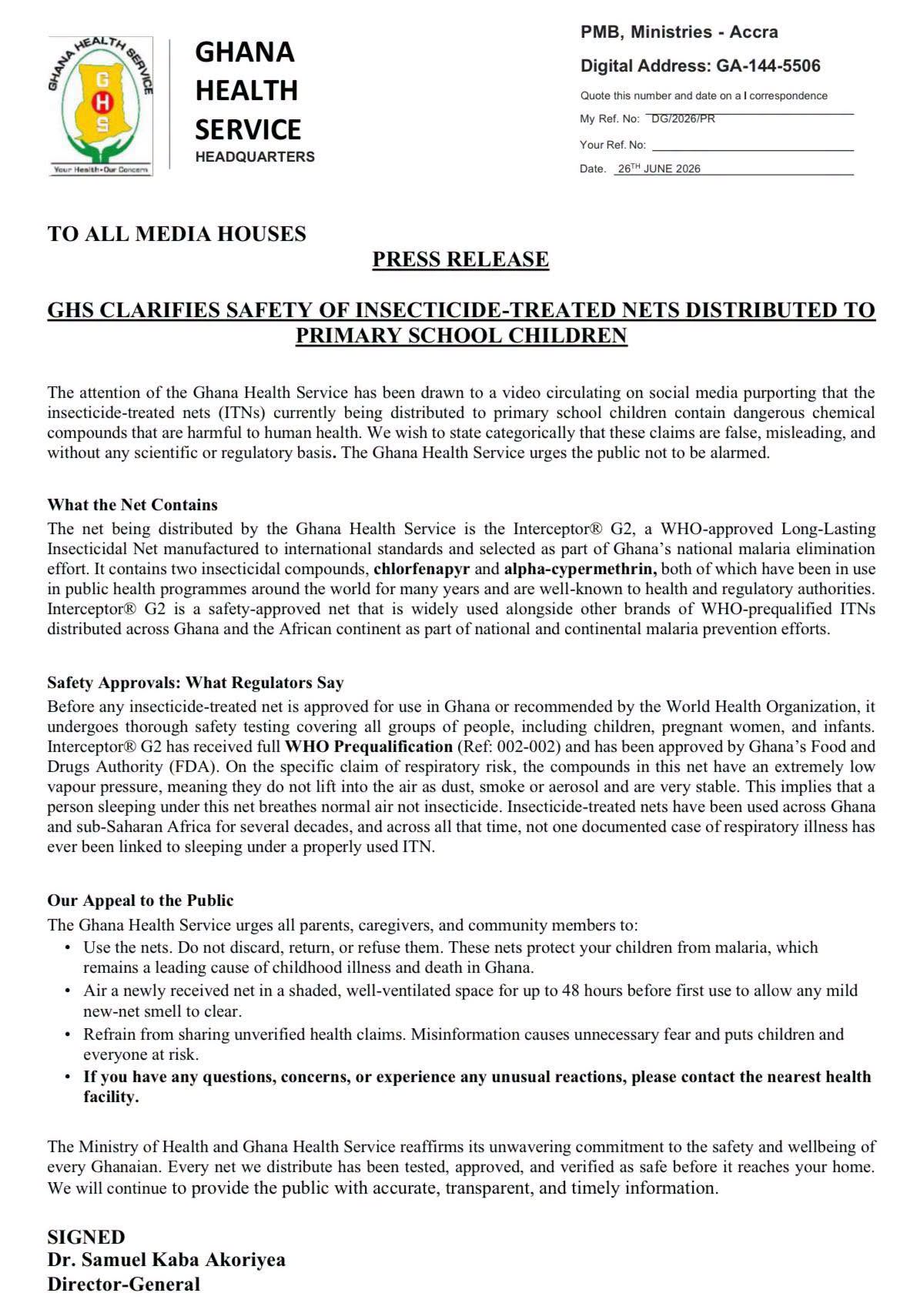
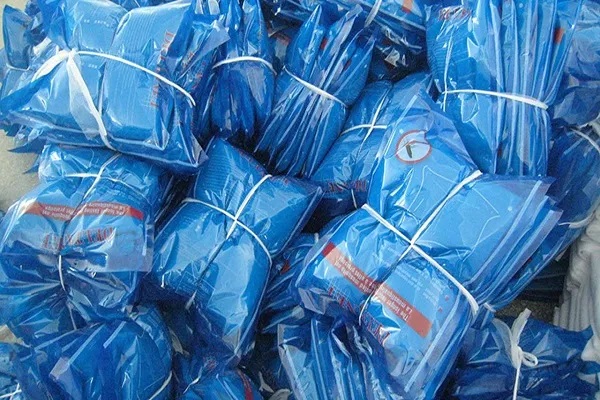


The Ghana Health Service (GHS) has dismissed claims circulating on social media that insecticide-treated nets (ITNs) being distributed to primary school children contain dangerous chemicals that pose a risk to human health.
In a statement dated June 26, the Service described the allegations as false and urged the public not to panic.
"We wish to state categorically that these claims are false, misleading, and without any scientific or regulatory basis. The Ghana Health Service urges the public not to be alarmed," the statement said.
According to GHS, the nets currently being distributed are the Interceptor® G2, a World Health Organization (WHO)-approved long-lasting insecticidal net selected as part of Ghana's national malaria elimination programme.
The Service explained that the nets contain two insecticidal compounds, chlorfenapyr and alpha-cypermethrin, both of which have been used in public health programmes around the world for many years.
"Interceptor® G2 is a safety-approved net that is widely used alongside other brands of WHO-prequalified ITNs distributed across Ghana and the African continent as part of national and continental malaria prevention efforts," it stated.
Addressing concerns about possible health effects, GHS said the nets had undergone extensive safety testing before being approved for use.
The statement noted that Interceptor® G2 has received full WHO Prequalification and has also been approved by Ghana's Food and Drugs Authority (FDA).
On claims that the nets could cause respiratory problems, GHS said the insecticidal compounds have an extremely low vapour pressure and therefore do not become airborne.
"Use the nets. Do not discard, return, or refuse them. These nets protect your children from malaria, which remains a leading cause of childhood illness and death in Ghana," it advised.
The Service also encouraged households to air newly received nets in a shaded, well-ventilated area for up to 48 hours before first use to remove any mild new-net smell and urged the public to avoid sharing unverified health claims.