
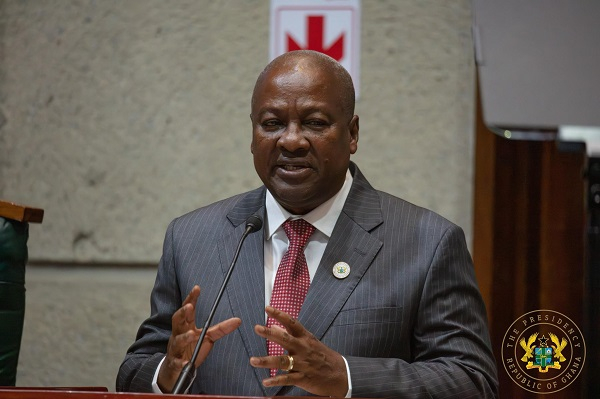


President John Dramani Mahama has calmed fears of an imminent fuel shortage amid the ongoing conflict in Iran, assuring Ghanaians that the country has sufficient petroleum reserves to last six weeks.
Speaking at the 2026 Kwahu Business Forum in Mpraeso in the Eastern Region, President Mahama assured citizens that Ghana is in no danger of running out of fuel, adding that the government is actively working to secure additional supplies.
He sought to calm the populace, emphasising that the government is working assiduously to cushion Ghanaians from the effects of the global shock.
“As we have always said, shocks will come and you cannot always predict these external events. However, you must build an economy that is resilient enough to withstand them,” he stated. “I know Iran and Israel are fighting, but so far, our economy has shown remarkable resilience.”
President Mahama added: “We have six months of export cover and six weeks of petroleum stocks, so there is no danger of us running out of petroleum products. Even as we utilise the reserve stock, we are simultaneously replenishing it.”
Touching on the rising fuel prices, the President disclosed that he has convened an emergency cabinet meeting to address the situation.
“I have called for this emergency cabinet meeting to decide on specific measures we can take to cushion petroleum prices while we hope the conflict comes to an end. There are adjustments we can make, particularly in the margins, to help maintain relatively stable prices as we pray for the war to cease.”
“The government remains fully committed to easing the burden on citizens. The cabinet will examine various aspects of the fuel price build-up and consider interventions to provide relief.”
President Mahama further assured the public that his administration has put in place measures to build a resilient economy capable of withstanding external shocks such as the Middle East conflict.
“I can confidently tell you that the economy will not collapse because of the war in Iran,” he emphasised.
Fuel prices in Ghana surged significantly effective April 1, 2026, following the escalation of the Iran conflict, which has driven global crude oil prices sharply higher. According to the National Petroleum Authority (NPA), petrol prices rose by approximately 15% to around GH¢13.30 per litre, while diesel increased by about 19% to GH¢17.10 per litre for the April 1–15 pricing window.
This represents one of the steepest hikes in recent months and is part of ongoing upward adjustments caused by international factors, including higher global oil prices and supply disruptions from the Middle East.
Although the relatively stable Ghanaian cedi has helped moderate the impact, the increases have raised concerns about higher transportation costs and inflation.
The government is currently reviewing options such as reducing fuel margins and levies to ease the burden on consumers.