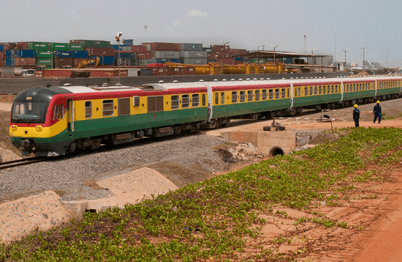


The New Patriotic Party (NPP) has questioned the government's acquisition of two refurbished diesel locomotives and 20 freight wagons, calling for full disclosure on their age, condition, cost and long-term value to Ghana's railway sector.
In a statement signed by Sulemana Alhassan Tampuli, MP and Co-Chair of the NPP's Transport Sector Committee, the party's Minority Caucus welcomed the investment as a step toward reviving rail transport and easing pressure on the nation's road network, but said the government had failed to disclose key details necessary for an objective assessment.
According to the statement, credible information available to the Minority Caucus indicates that the locomotives are refurbished British Rail Class 56 diesel-electric locomotives, originally manufactured in the United Kingdom between 1976 and 1983 and last operated by Colas Rail. Of the 135 units originally produced, the statement said, fewer than 15 remain in service today, with considerably reduced capacity and efficiency.
While acknowledging that refurbished locomotives can still offer useful service life when properly maintained, the NPP insisted that Ghanaians deserve transparency on the units' operational history, refurbishment scope, expected remaining service life and total lifecycle costs.
The NPP raised concerns over maintenance sustainability, noting that the Class 56 fleet has largely been withdrawn from mainstream service worldwide, which could make sourcing spare parts increasingly difficult and costly. It called on government to disclose what spare parts arrangements, technical support agreements and local training programmes have been secured.
The statement drew comparisons with Diesel Multiple Units previously procured from PESA of Poland under the former NPP administration, which came with a five-year maintenance framework and skills transfer arrangement.
The Minority Caucus also questioned the readiness of the Tema–Mpakadan railway corridor for freight operations, citing uncertainty over the availability of mobile harbour cranes, reach stackers, container handling systems and other intermodal logistics infrastructure needed at the Mpakadan railhead.