
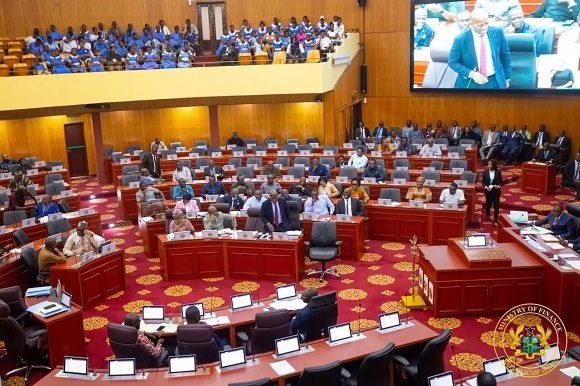


Parliament has passed the Value-for-Money Office Bill, 2026, establishing a statutory body to regulate, monitor, coordinate, and promote value-for-money assessments in the management of public expenditure and procurement.
The Bill responds to growing concerns about inefficiencies in public expenditure, project cost overruns, delays in implementation, and weak monitoring systems.
By granting statutory authority to conduct value-for-money assessments, Parliament has taken a decisive step towards enhancing efficiency, transparency, and accountability in public financial management.
When the bill is assented by the president, it will fill a critical gap in Ghana’s accountability framework, which has traditionally focused on financial and compliance audits under the Service Act, 2000 (Act 584) and the oversight powers of the Auditor-General as provided in Article 187 of the 1992 Constitution.
These mechanisms, while important, have largely emphasized procedural compliance rather than evaluating whether public funds achieve value for money.
The new legislation empowers the Office to undertake systematic evaluations of government programmes and projects to determine whether resources are being utilised economically, efficiently, and effectively.
The legislation, which contains 67 clauses, provides for the establishment of the Office, its objects, and core functions.
It also introduces a digital management platform to facilitate real-time monitoring of projects, enhance data accuracy, and support analytical reporting.
The Committee on Finance, however, cautioned against duplication of existing systems and stressed the need for interoperability with national databases, as well as strong cybersecurity safeguards.
In line with international best practices, the Value-for-Money Office mirrors similar frameworks in countries such as the United Kingdom, Canada, Singapore, Slovakia and the United States of America.
Its establishment underscores Ghana’s commitment to strengthening fiscal discipline, improving service delivery outcomes, and ensuring transparency in the use of public funds.
The Committee emphasized that while the Office will enjoy financial autonomy, it must remain subject to strict reporting standards and periodic audits to safeguard accountability.
It further recommended clear procedural safeguards for assessments, including notice requirements, timelines, and reporting obligations, to prevent jurisdictional overlap with other oversight institutions.
GNA