
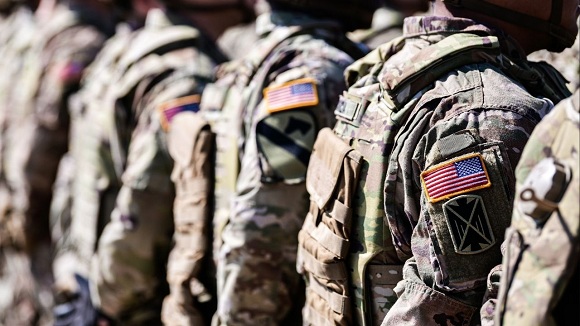


The US army has raised the maximum enlistment age to 42 years old and scrapped a barrier for potential recruits who have a legal conviction for marijuana or drug paraphernalia possession.
People aged up to 42 can now enlist in the army, the army national guard and the army reserves, according to the new US army regulation, lifting the previous ceiling of 35 years old.
The army has also removed restrictions upon recruits who have a single conviction for possession of marijuana or associated items such as bongs, pipes and spoons. Previously, such a conviction would require a special wavier from officials in the Pentagon, with the recruit having to wait 24 months to enlist and passing a drug test.
The change in age limit brings the army more into line with other branches of the US military, such as the navy and air force, and may help deal with the recruitment struggles the army has faced in recent years.
After missing its recruitment target by 25% in 2022, the US army has changed its approach to attracting more people into the forces, including targeting more gen Z applicants.
However, the average age of recruits has been increasing, with analysts at the Rand Corp in 2023 recommending an increase in the maximum enlisted age as older recruits are “of higher quality, more focused, and more motivated, as well as being ready to ship to basic training more quickly”.
“We’re kind of looking at a more mature audience that might have experience in technical fields,” said Angela Chipman, chief of military personnel accessions at the US army, according to Task and Purpose. “We need warrant officers with extreme technical capabilities, and those will come from the enlisted ranks.”
The changes in army policy come as the US continues to wage war upon Iran, with the Pentagon moving about 2,000 paratroopers and about 4,500 marines to the region in recent days.
US lawmakers have been asked to provide another $200bn in funding for the Iran conflict, which continues despite Donald Trump’s assertion it has been “won”, which would further add to a Pentagon budget that is already more than $900bn.
the Guardian