


The government has announced plans to build 10 new secondary schools and upgrade 200 existing ones across the country under a US$300 million World Bank-funded education project aimed at improving access to quality secondary education and eliminating the double-track system.
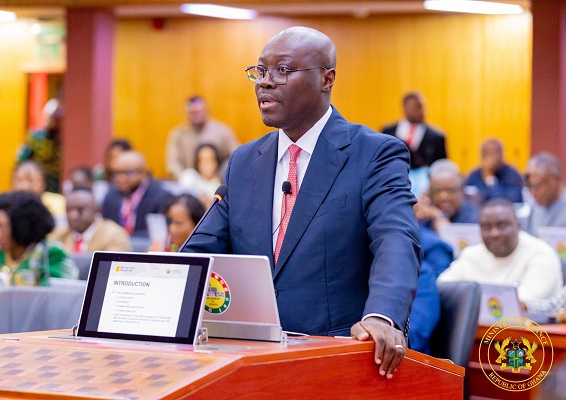
Presenting the 2026 Mid-Year Budget Review in Parliament on Thursday, July 23, Finance Minister Dr Cassiel Ato Forson described education as one of the country’s most important investments.
“Education remains one of the most powerful investments we can make in the future of our country,” he said.
According to the Finance Minister, the project will finance 210 major infrastructure interventions nationwide to improve learning conditions and expand access to secondary education.
He said the initiative includes the construction of 10 new secondary schools, the rehabilitation of 150 existing secondary schools, the upgrading of 30 Category C schools to Category B, and the elevation of 20 Category B schools to Category A.
“Under this US$300 million World Bank financing initiative, government will undertake 210 major infrastructure interventions across the country,” Dr Forson told Parliament.
The project will also provide furniture for the upgraded schools and ensure that every secondary school student receives free textbooks.
“We are also going to procure furniture to support these schools that we are upgrading and ensure that every schoolchild going to any of our secondary schools benefits from textbooks free of charge,” he said.
Dr Forson announced that the 10 new secondary schools will be strategically located in underserved areas, with one school each to be built in the Western, Western North, Greater Accra, Volta, Oti, Northern, Upper East, Upper West, Savannah and Central regions.
He said the project is expected to benefit about 2.3 million students, more than 100,000 teachers, and approximately 2,000 school leaders across the country.
The Finance Minister added that the investment would help the government eliminate the double-track system within two calendar years, improve learning outcomes, particularly in Mathematics and Science, increase female participation in STEM and Technical and Vocational Education and Training (TVET), and equip young people with digital, technical and green skills needed for future jobs.
“The project will support government efforts to eliminate the double-track system within two calendar years, improve learning outcomes, particularly in Mathematics and Science, expand female participation in STEM and TVET education, and equip our young people with the digital, technical and green skills required for the jobs of the future,” Dr Forson said.